
Gold Rush speculators cut down this giant sequoia to dance on its stump, and the stump is still sitting in the forest
One of California’s first big tourist attractions wasn’t a beach or a waterfall. It was a dead tree, and people showed up to dance on it.
Up Highway 4 near Arnold, in Calaveras Big Trees State Park, the stump of the Discovery Tree still sits in the North Grove, more than 25 feet across. Standing next to it, with living giants towering all around, is a little eerie in the best way.
Psst, we made you a West Coast Adventure Map. Nearly 1,900 of our favorite spots, already pinned, ready to load into Google Maps in two clicks: grab it here.
How a grizzly chase ended in a dance floor
The story goes that a hunter named Augustus T. Dowd wandered into this grove in the spring of 1852 while chasing a wounded grizzly. What he found were trees so big they barely seemed real.
By 1853, speculators had stripped the biggest one of its bark and set out to bring it down. No saw was large enough, so five men spent 22 days drilling holes through the trunk with augers before wedges finally tipped it over.
Then things got weird. The stump was planed smooth into a dance floor, and a bar and a two-lane bowling alley went up on the fallen trunk. John Muir was not amused, and his protest carried the title “The Vandals Then Danced Upon the Stump!”
📍 GET THE ULTIMATE CALIFORNIA MAP 🗺️
Get our curated list of the best adventures and things to do north of LA loaded onto your maps with just two clicks!
✅ Waterfalls ✅ Hikes ✅ Viewpoints
✅ National Parks ✅ 1400+ Pins
Walking the North Grove loop
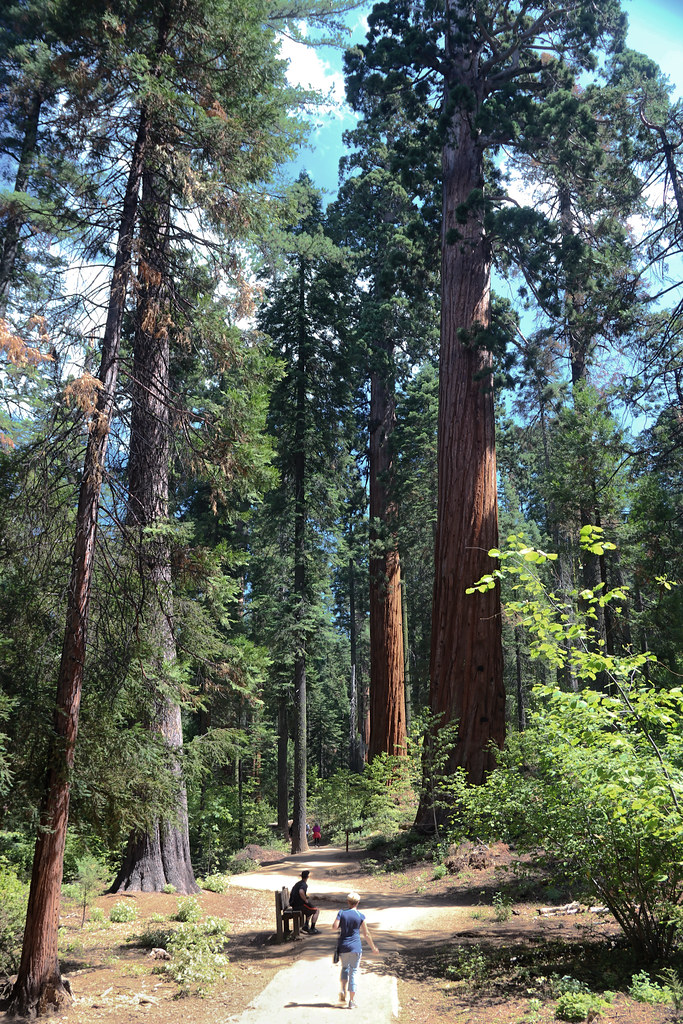
This is the easy one: a loop of about 1.5 miles with only around 75 feet of climbing. It’s well marked and gentle, the kind of walk where your neck gets more of a workout than your legs.
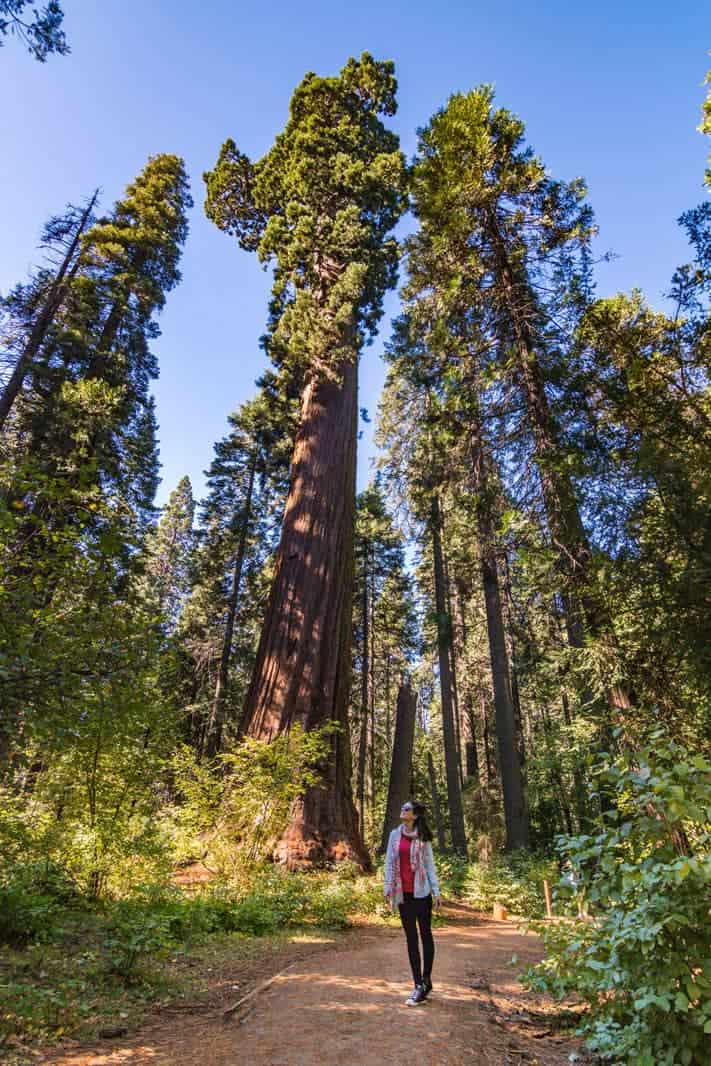
Past the Big Stump, look for the Mother of the Forest. Speculators stripped its bark in 1854, the saw marks are still visible, and a 1908 fire charred what was left, so it now stands like a scorched pillar among healthy neighbors.
The Father of the Forest fell long before any of this drama, and you can walk right inside its hollow trunk. Nearby lie the remains of the Pioneer Cabin Tree, which had a tunnel carved through it in the early 1880s to compete with Yosemite’s tunnel tree and finally came crashing down in a January 2017 storm.
The biggest trees are in the South Grove, for now
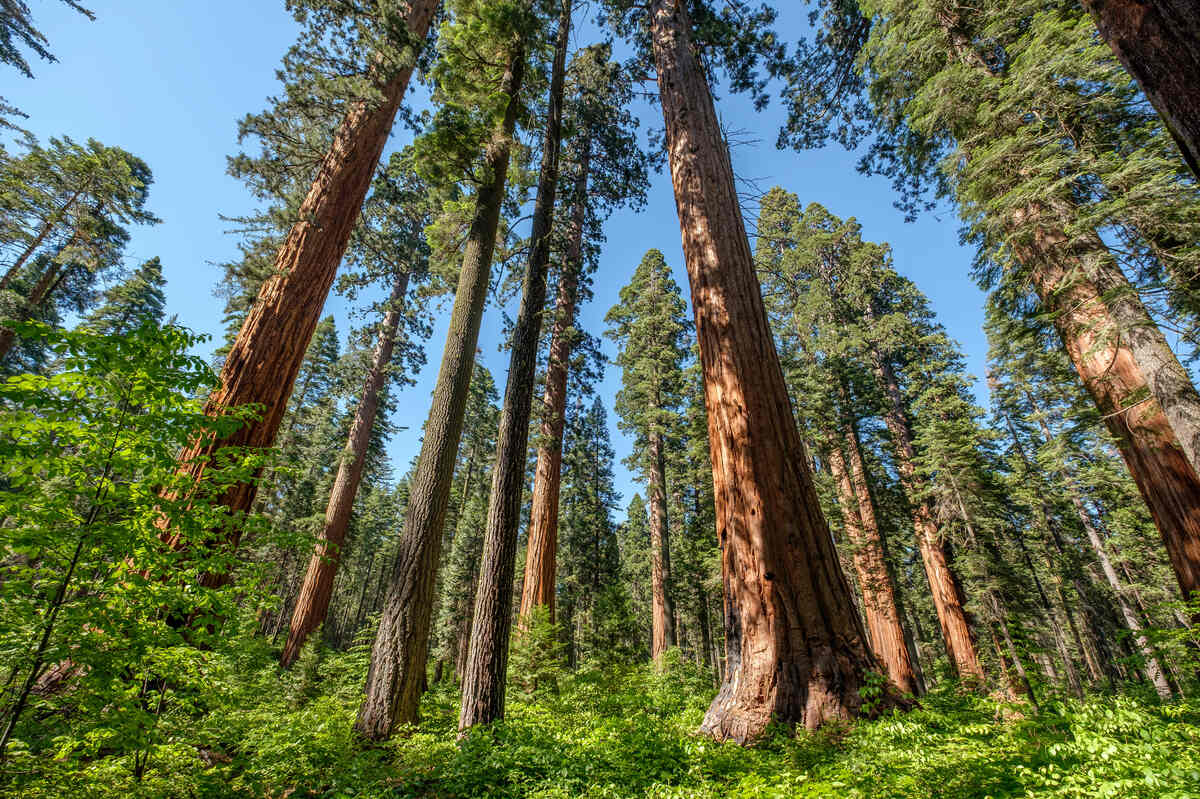
Here’s my take: if your legs are up for it, the South Grove is the better hike. It holds roughly 1,000 large sequoias, about ten times as many as the North Grove, and the park’s biggest tree lives back there.
That’s the Agassiz Tree, about 25 feet across and around 250 feet tall. The full hike out to it runs about 5 miles round trip with roughly 790 feet of climbing, and the first stretch from the parking lot is a steady uphill. Then you cross Beaver Creek on a footbridge, the forest closes in, and the trees just keep getting bigger.
Timing matters here. The park road out to the South Grove closes to cars at the first significant snowfall or December 1, whichever comes first, and typically stays shut until around May 1.
The North Grove stays open all year, so you can still see the stump in winter. But if you want the giants, this fall is your window.
Before you go
There’s a per-vehicle day-use fee, and day-use areas are open sunrise to sunset. Dogs are limited to campgrounds and fire roads, so the trails are a no-pup zone.
Check the official park page for current fees and conditions before you head up the mountain.
So which side are you on: would you have taken a spin on that stump in 1853, or stood outside with Muir shaking your head? Tell us in the comments!
Trip tips: grab a rental car to get out here, lock in your hotel before the good rooms are gone, or skip both and book a camper van instead.
Rules and fees change, so always confirm current requirements before you go.