Things to Do in Joshua Tree National Park: 8 Best Activities & Stops
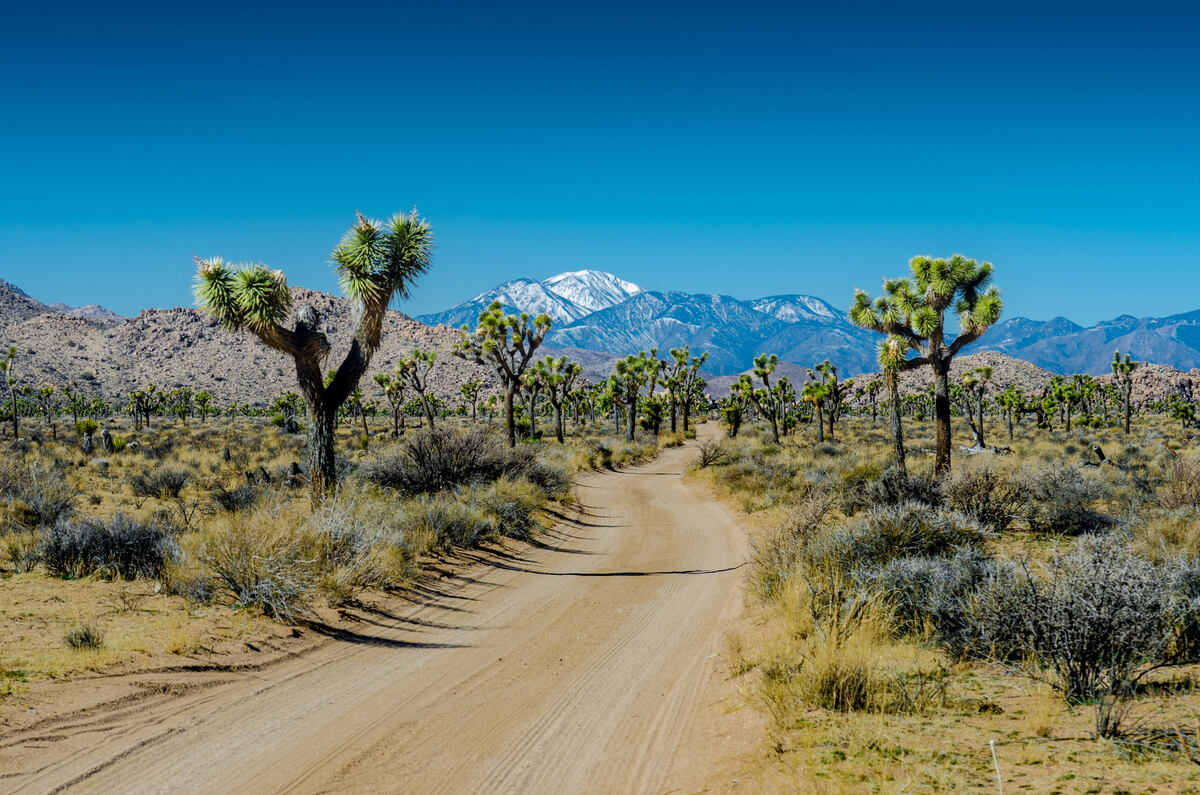
Joshua Tree is one of those places that gets under your skin. It’s weird, ancient, dramatic, and unlike anywhere else in California. Two deserts collide here — the Mojave and the Colorado — creating a landscape of twisted Joshua trees, stacked granite boulders the size of houses, and skies so dark at night they feel like a different planet.
It’s also massively popular, so going in with a plan matters. Here’s everything you need to know about what to do in Joshua Tree National Park, from the classic hikes to the strange and wonderful stuff just outside the park gates.
Before You Go — A Few Essentials
Best time to visit: October through April. Spring wildflowers (February–April) can be spectacular if there’s been winter rain. Summer temperatures regularly hit 100°F+ with ground temps near 180°F — not hiking weather.
Entrance fee: $35 per vehicle (7-day pass). Download the NPS app and grab offline maps before you enter — cell service is essentially nonexistent inside the park.
Water: Bring more than you think you need. The NPS recommends one gallon per person per day. There are no water sources in the backcountry.
Enter from the West: Use the West Entrance via the town of Joshua Tree, not the North Entrance near Twentynine Palms. The West Entrance puts you straight into the best terrain — Hidden Valley, Barker Dam, and the Wonderland of Rocks.
📍 GET THE ULTIMATE CALIFORNIA MAP 🗺️
Get our curated list of the best adventures and things to do north of LA loaded onto your maps with just two clicks!
✅ Waterfalls ✅ Hikes ✅ Viewpoints
✅ National Parks ✅ 1400+ Pins
1. Hike the Classic Trails
Joshua Tree has trails for every level, and the ones in the park’s northern section around Park Boulevard are the standouts.
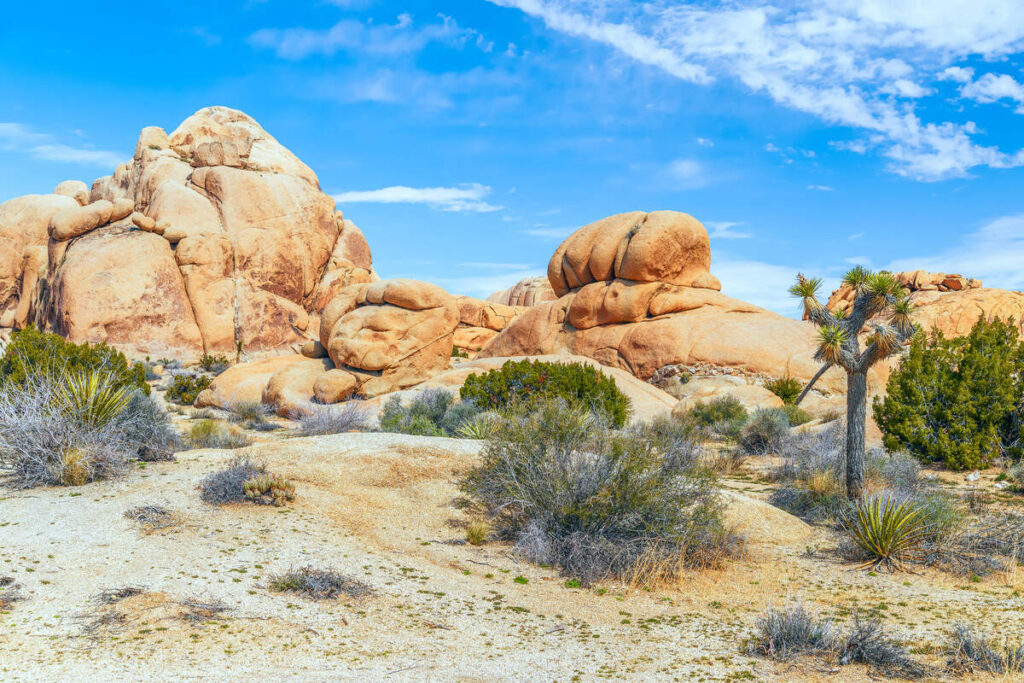
Hidden Valley Trail (1 mile loop) is the quintessential Joshua Tree hike — easy, iconic, winding through a natural rock enclosure of enormous boulders surrounded by Joshua trees. Cattle rustlers supposedly used to hide stolen livestock here. Now it’s one of the most photographed spots in the park.
Barker Dam Trail (1.3 miles) leads to a small reservoir tucked into the boulders — one of the few reliable water sources in the park, which means wildlife sightings are common. Native American petroglyphs are nearby (though unfortunately vandalized with paint in the 1960s during a film shoot). Beautiful and easy.
Ryan Mountain Trail (3 miles, 1,050 ft gain) is the best summit hike in the park — a moderately challenging out-and-back that rewards you with 360-degree views of the Wonderland of Rocks, the Pinto Basin, and on a clear day, the San Jacinto Mountains. Go early to beat the heat.
Skull Rock Trail (1.7 miles loop) starts right off Park Boulevard and winds past Skull Rock — a naturally eroded boulder that genuinely looks like a skull — and through a great variety of desert scenery. Easy and very doable for families.
For more serious hikers, the Boy Scout Trail (8 miles one way) offers real solitude and sweeping desert vistas well beyond the crowds.
2. Watch the Sunset from Keys View
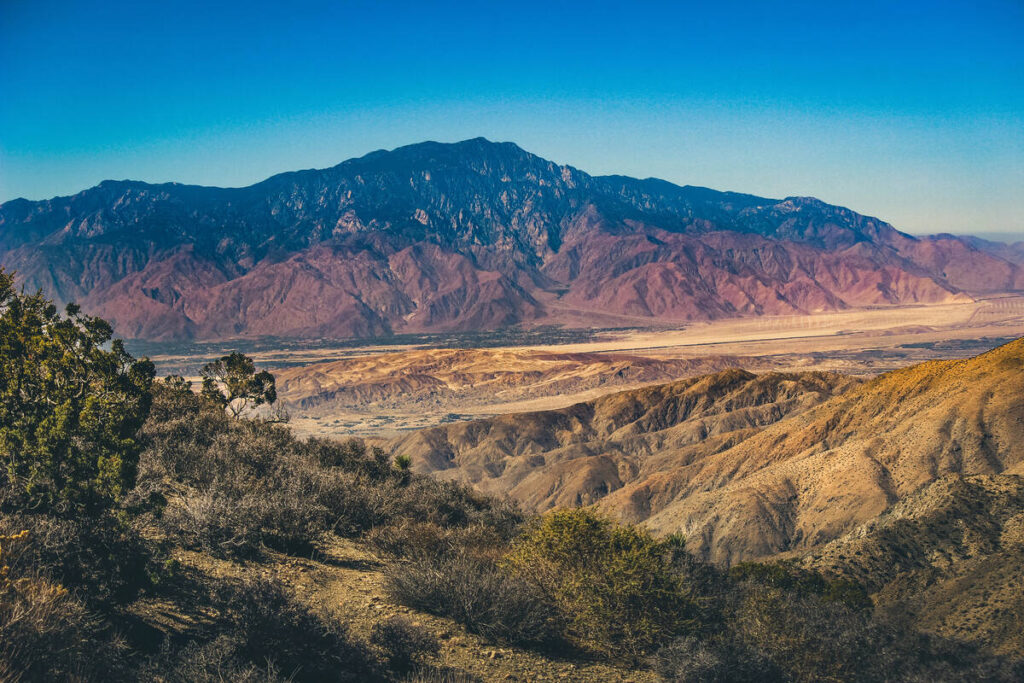
Keys View is the single best viewpoint in Joshua Tree and one of the best panoramic overlooks in all of Southern California. At 5,185 feet elevation, it delivers sweeping views over the Coachella Valley, the Salton Sea glinting in the distance, the San Andreas Fault running through the valley floor, and the San Jacinto Mountains rising dramatically to the southwest.
Sunset here is the move. The light turns the desert gold, the mountains go purple, and the whole valley below goes quiet. It’s a 10-minute walk from the parking lot — one of the best easy experiences in any national park.
Go on a weekday or arrive early — the parking lot fills up fast in peak season.
3. Rock Climb (or Watch the Climbers)
Joshua Tree is one of the most famous rock climbing destinations in the world. The park has over 8,000 climbing routes on its granite formations, ranging from beginner single-pitch climbs to technically demanding multi-pitch routes that draw serious climbers from across the globe.
You don’t need to climb to appreciate it. Watching experienced climbers work their way up the faces at Hidden Valley, Intersection Rock, and Saddle Rocks is genuinely impressive — and adds a whole extra dimension to the park visit. The climbing culture here has its own distinct vibe: laid-back, community-oriented, deeply connected to the desert.
If you want to try it, Joshua Tree has several guide services offering beginner instruction. Vertical Adventures is one of the most established operators in the area. No experience necessary for a beginner half-day session.
4. Stargaze in One of California’s Darkest Skies
Joshua Tree is an International Dark Sky Park — one of the best places in Southern California to see the Milky Way with the naked eye. The park is far enough from Los Angeles and Palm Springs that light pollution drops dramatically, and the desert air is clear and dry for most of the year.
The NPS designates four official stargazing areas inside the park: the parking lots at Quail Springs, Hidden Valley, Cap Rock, and Ryan Mountain. Pinto Basin in the eastern part of the park has the darkest skies of all and is the pick for serious stargazing and astrophotography.
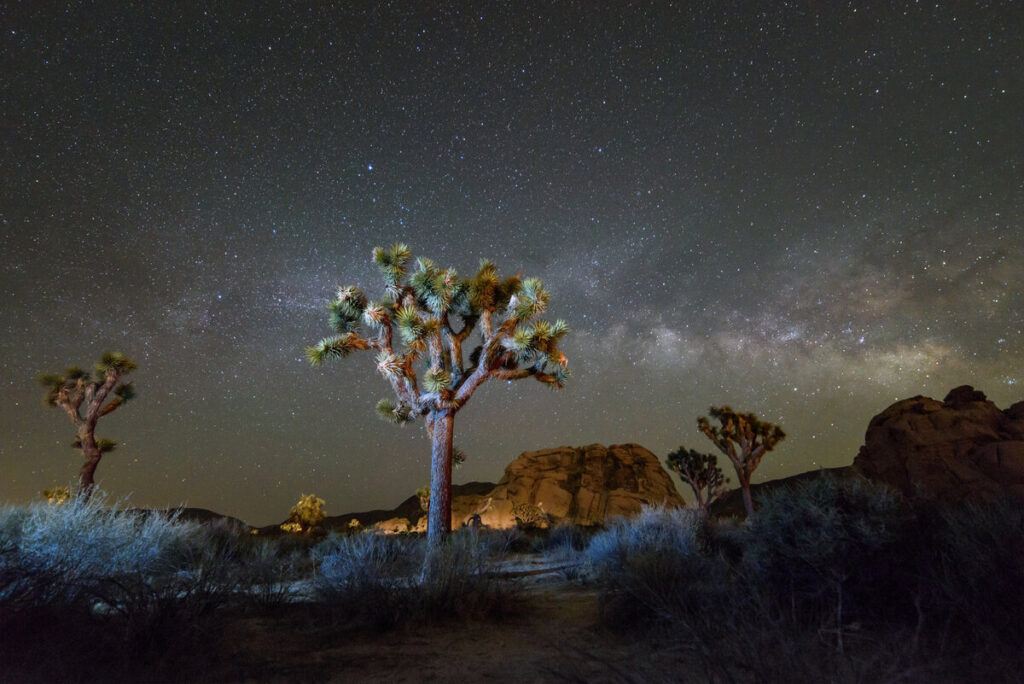
Tips: go on a moonless night, bring a red-tinted flashlight (white light kills your night vision), wear layers (desert nights get cold fast), and give your eyes 20–30 minutes to fully adjust. The views are worth the patience.
🏨 Need a place to crash nearby?
From rustic cabins to boutique inns—check prices and availability in just a click.
5. Walk Through the Cholla Cactus Garden
The Cholla Cactus Garden is one of the most visually striking stops in the entire park — a dense, otherworldly grove of teddy bear cholla cactus covering a broad bajada in the transition zone between the two deserts. At golden hour, the fuzzy-looking spines light up like halos in the slanted light.
A short 0.25-mile interpretive loop winds through the garden. Do not touch the cholla. Despite their fluffy appearance the spines are barbed and will embed themselves in skin instantly — earned the nickname “jumping cactus” for a reason.
This spot sits in the eastern section of the park along Pinto Basin Road, a bit off the main Park Boulevard circuit. Worth the extra drive.
6. Drive Geology Tour Road
Geology Tour Road is an 18-mile dirt road that winds deep into the southern section of the park through terrain most visitors never see — valleys of Joshua trees, old gold mines, dry lake beds, and volcanic formations that tell 100 million years of geological history.
A standard vehicle can handle the first 5 miles. Beyond that, high clearance or 4WD is recommended. The NPS sells a self-guided tour booklet at the trailheads that explains each numbered stop along the route — it’s genuinely fascinating even if you’re not a geology person.
This is the spot for solitude in Joshua Tree. Crowds drop off dramatically once you leave Park Boulevard.
7. Visit Pioneertown & Pappy & Harriet’s
Pioneertown is not inside the national park, but it’s absolutely essential to any Joshua Tree trip. About 20 minutes from the West Entrance, this is a real 1940s Wild West movie set built by Hollywood investors including Roy Rogers and Gene Autry — used to film over 50 westerns before becoming an actual community where people live and work.
Wander Mane Street (yes, Mane), poke around the frontier storefronts, and end up at Pappy & Harriet’s Pioneertown Palace — a legendary desert honky-tonk serving barbecue and cold drinks with live music on weekends. It’s hosted Paul McCartney, LCD Soundsystem, and Robert Plant among others over the years. One of the great American roadhouse experiences, full stop.
Go on a weekend when more of the town is active. Weekdays are quieter but still worth the visit for Pappy’s alone.
8. Camp Under the Stars
Camping in Joshua Tree is one of the best ways to experience the park — waking up at sunrise with the boulders glowing orange, having the trails to yourself before the day visitors arrive, and spending evenings watching the stars appear one by one over the desert.
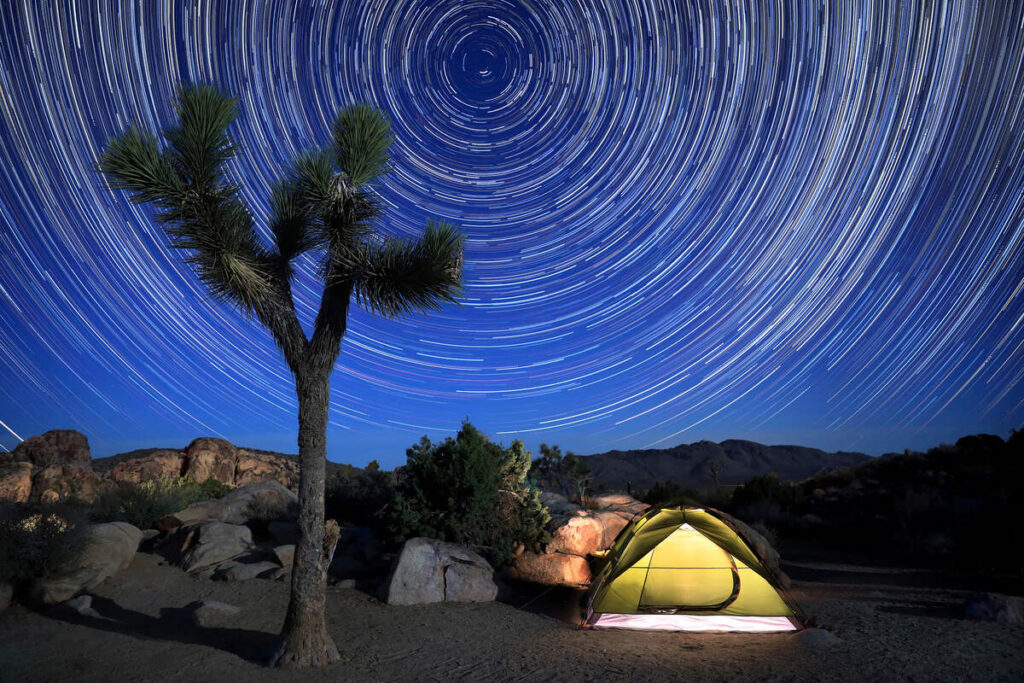
The park has nine campgrounds. A few highlights:
Hidden Valley Campground is the most popular and iconic — first-come, first-served, surrounded by boulder formations perfect for scrambling. No hookups, but the setting is unbeatable.
Jumbo Rocks Campground is large, reservable, and close to Skull Rock and the best hiking. Great for families.
Cottonwood Campground in the south of the park near the Colorado Desert entrance is less crowded and has a more remote desert feel.
Book well ahead for peak season (October–April). Summer weekends are actually easier to get sites, but see above re: heat.
Getting to Joshua Tree
The park is about 2.5 hours from Los Angeles and 45 minutes from Palm Springs. The closest airport is Palm Springs International (PSP). No public transit serves the park — a car is essential.
Fuel up before you enter. There are no gas stations inside the park, and the nearest towns (Joshua Tree, Twentynine Palms, Yucca Valley) are your only options.
🕒 Save hours of planning time! ⛰️
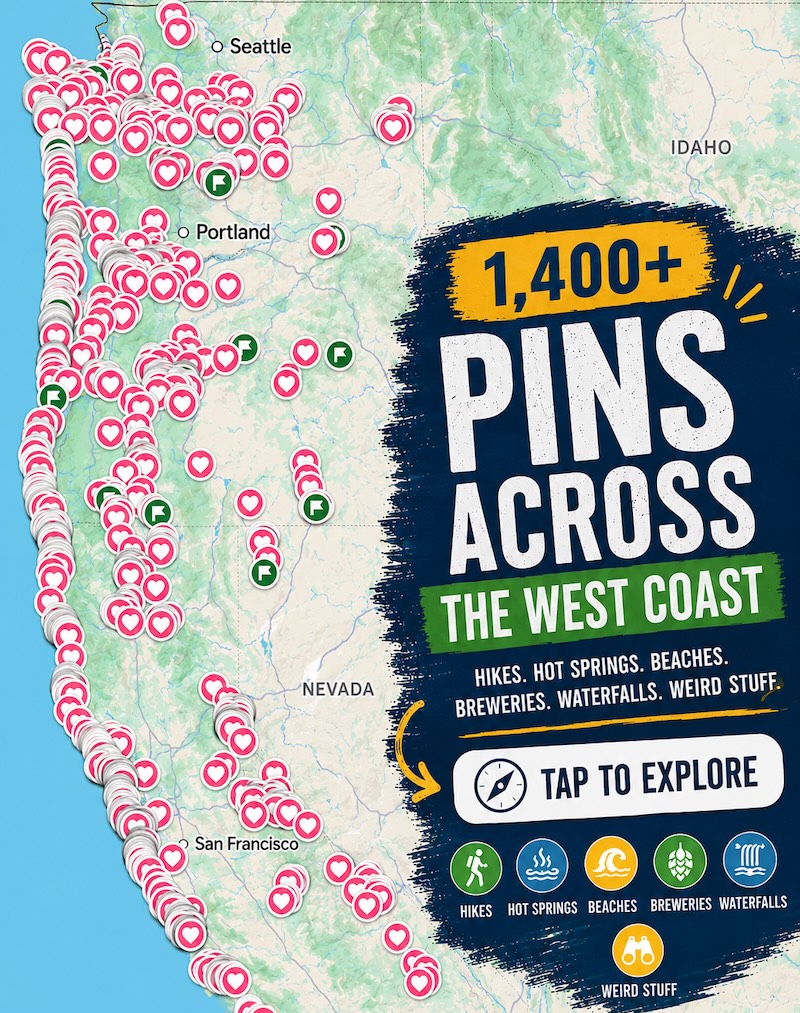
📍 Get The Ultimate West Coast Map
1400+ breweries, trails, waterfalls, beaches, and weird roadside stops—mapped for you!
More California Desert Adventures
Joshua Tree is one of California’s most extraordinary places — check out our guides to the best things to do in California and the best national parks in Southern California to keep the adventure going.
Happy exploring, friend!