Lighthouse keepers abandoned this island off the San Mateo coast in 1948, and elephant seals showed up seven years later
A quarter mile off the San Mateo coast sits a tiny island with a crumbling two-story house on it, and no lighthouse keeper has called it home since 1948. The keepers packed up and left, and seven years later, the first elephant seals showed up.
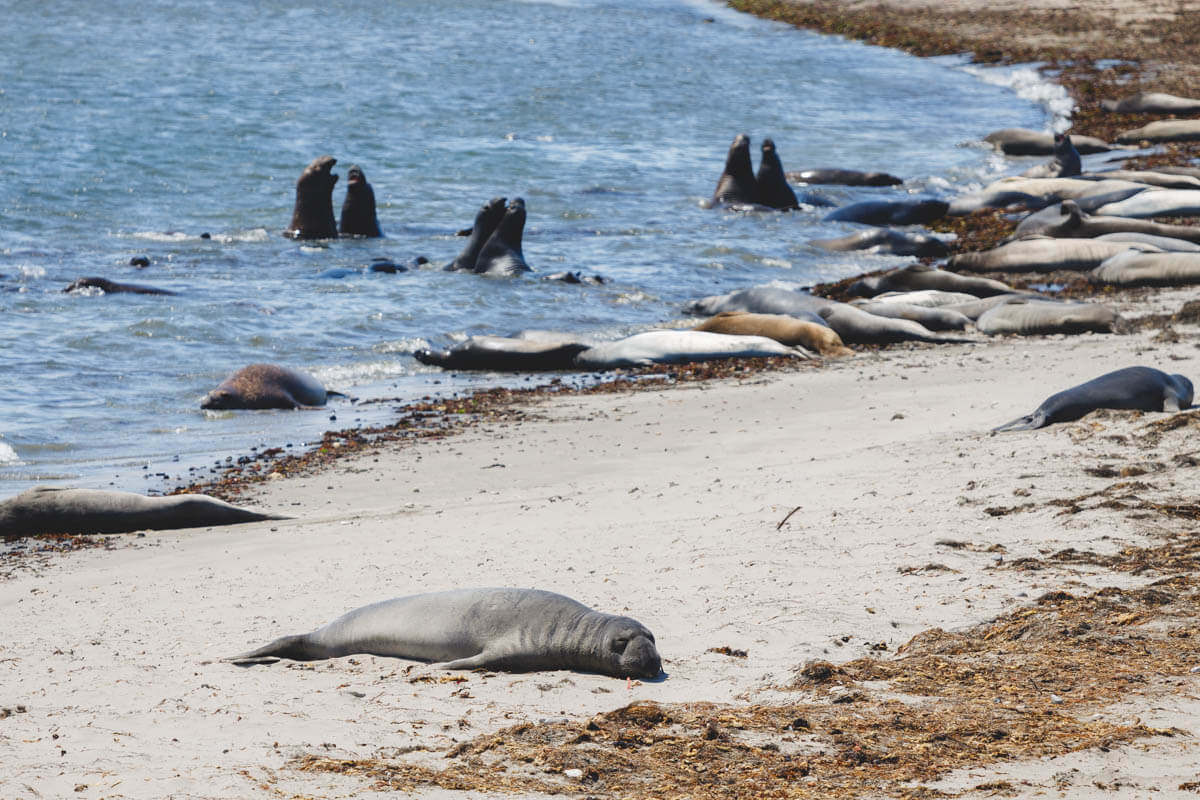
Today the whole point belongs to them. Thousands of these enormous, grumbling, sand-flinging seals come ashore at Año Nuevo State Park every winter, and from December 15 the only way in to see them is on a guided walk.
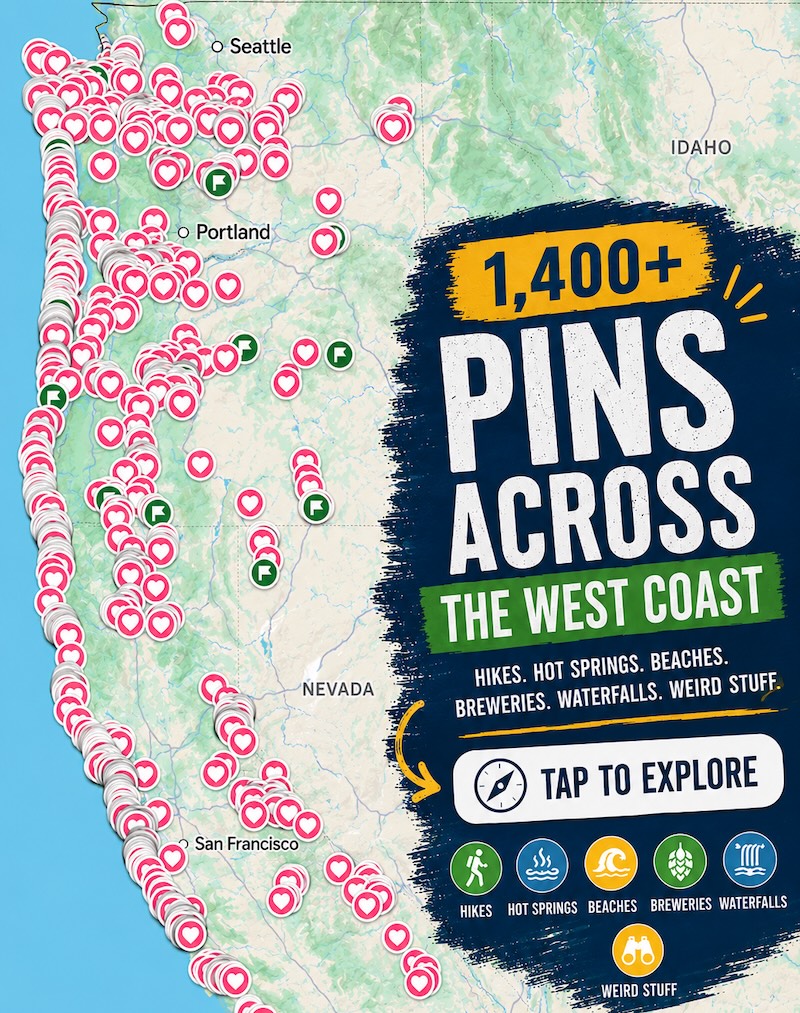
Psst, we made you a West Coast Adventure Map. Nearly 1,900 of our favorite spots, already pinned, ready to load into Google Maps in two clicks: grab it here.
The island the keepers gave up
This point got its name on January 3, 1603, when a Spanish expedition led by Sebastián Vizcaíno sailed past. The expedition’s chaplain called it Punta de Año Nuevo, New Year’s Point, after the day they spotted it.
A light station went up on the island in 1872, starting with a steam fog whistle, and the first light switched on in 1890. Keepers lived out there until 1948, when the station was shut down and swapped for a whistle buoy offshore.
Then the wildlife took over. Sea lions had been a headache for the keepers for years, and in 1955 the first elephant seals were spotted on the island.

The old keepers’ house is still out there, slowly falling apart, and it’s closed to visitors. Seeing it from the point, with birds circling the roof and the swell crashing around it, feels a little like looking at a shipwreck that never sank.
📍 GET THE ULTIMATE CALIFORNIA MAP 🗺️
Get our curated list of the best adventures and things to do north of LA loaded onto your maps with just two clicks!
✅ Waterfalls ✅ Hikes ✅ Viewpoints
✅ National Parks ✅ 1400+ Pins
From a handful of survivors to a beach full of bulls
Here’s the wild part. Hunters killed northern elephant seals for their blubber oil through the 1800s, and by 1892 only 50 to 100 were left anywhere.
Once protections kicked in, they slowly came back. The first pup was born on Año Nuevo Island in 1961, males started hauling out on the mainland in 1965, and the first known mainland birth came in January 1975.
Today State Parks counts roughly 5,000 seals in the colony during the winter breeding season. The species as a whole is back to around 200,000 animals, which might be one of the best comeback stories on the whole California coast.

What you’ll actually see on a winter walk
The breeding season runs on a tight schedule. Adult males and pregnant females start arriving in early December, and the bulls spend December and January fighting for access to the females.
Pups are born from late December to early February. Mothers nurse them for about a month, mate again, and head back to sea, and by early March most of the adults are gone while the pups hang around learning to swim.
My pick? January. You’ve got a real shot at catching bulls squaring off and brand-new pups on the same beach, and that combo is pure chaos in the best way.
How the guided walks work
Guided walks run December 15 through March 31, and from December 1 to 14 the viewing area is closed completely while the seals settle in. There are no walks on December 25, or on January 31 and February 1, when the park hosts its Seal Adventure fundraiser.
The walk covers 3 to 4 miles and takes about 2.5 hours start to finish. State Parks rates it moderate, and a good chunk is sand dunes, so this is not a flip-flop situation.
Tickets are $7 per person plus a $3.99 reservation fee, and kids 4 and under are free. You book through ReserveCalifornia online or at 1-800-444-4445, and tour reservations open 56 days ahead, so you can already lock in a walk for late December.
Day-use parking is $10 per vehicle. Umbrellas aren’t allowed in the seal viewing areas and strollers aren’t allowed in the preserve from December through March, so pack a real rain jacket instead.
One thing to know after last season
Last February, State Parks confirmed highly pathogenic avian influenza in seven weaned pups here. Public seal viewing closed and the remaining guided walks of that season were canceled.
The 2026-2027 walk schedule is back on the books, but viewing areas can close based on what the seals are doing. Keep your distance, never touch a live or dead seal, and check the official park page for current conditions before you go.
🏨 Need a place to crash nearby?
From rustic cabins to boutique inns—check prices and availability in just a click.
Make a day of it
We’ve wandered the bluffs and dunes here outside of seal season, and the rest of the park is worth your time too. Our full Año Nuevo State Park guide covers the other trails, the beaches, and the farm stand down the road.
Año Nuevo sits between Half Moon Bay and Santa Cruz, so it slots right into a coast weekend. Here’s what to do in Half Moon Bay on one end and Santa Cruz on the other.
So which are you hoping to catch: a pair of bulls going at it, or a pup’s very first week? Tell us when you’re planning to go!
Trip tips: grab a rental car to get out here, lock in your hotel before the good rooms are gone, or skip both and book a camper van instead.
Rules and fees change, so always confirm current requirements before you go.