Male tarantulas are roaming this Bay Area mountain looking for love right now, and the females they’re after can live 25 years
Every fall, Mount Diablo hosts the Bay Area’s strangest dating scene, and every single suitor has eight hairy legs. From now through October, male tarantulas are leaving their burrows and wandering across the mountain’s trails and roads looking for a mate.
The best part? You don’t need a guide, a permit, or a particularly strong stomach to see them. Just good timing and a willingness to look down.
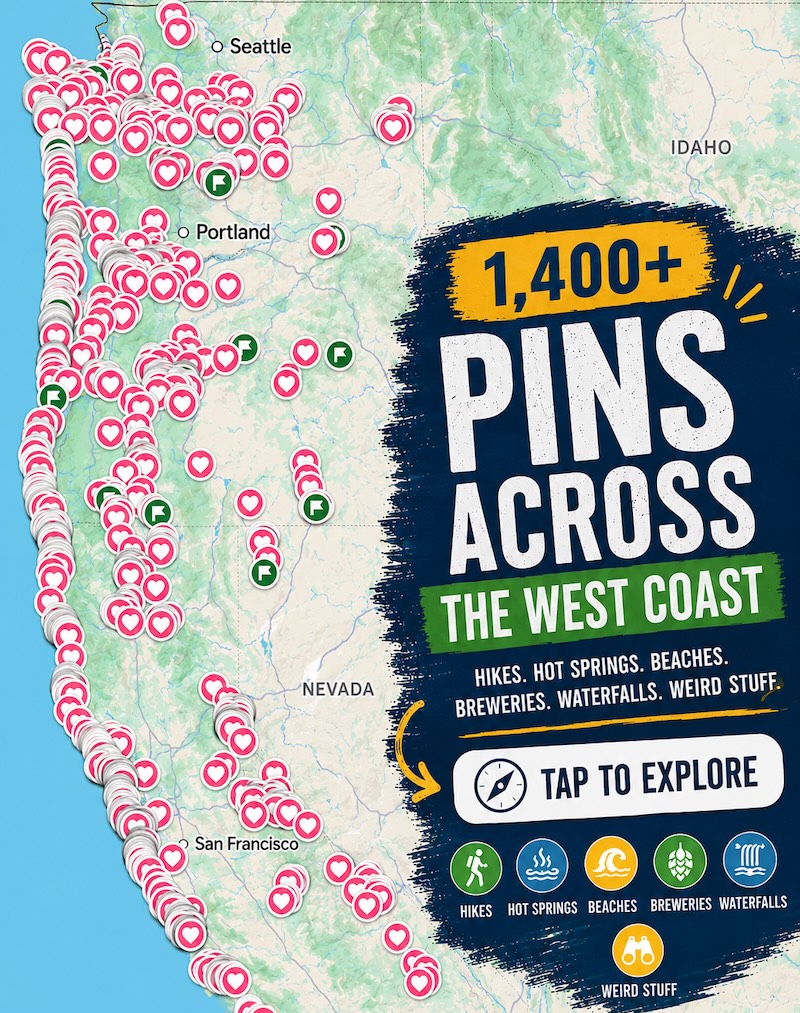
Psst, we made you a West Coast Adventure Map. Nearly 1,900 of our favorite spots, already pinned, ready to load into Google Maps in two clicks. Grab it here.
Why the tarantulas are suddenly everywhere
These aren’t random spiders out for a stroll. According to the Mount Diablo Interpretive Association, the males you’ll spot are somewhere between four and seven years old, and they’ve just gone through their final molt. That last shed leaves them with a set of hooks on their front legs, built for one job only: mating.
Once they’ve got those hooks, they hit the road. A single male may wander as far as a mile searching for a female’s burrow, which is a serious commute on eight tiny legs. Bay Area mating season typically kicks off in mid-September and peaks around mid-October, so right now is prime time.
Here’s the bittersweet part. After a couple of months of searching, the males weaken and die as winter sets in. So every tarantula you see crossing the trail this fall is on the most important road trip of his life.
📍 GET THE ULTIMATE CALIFORNIA MAP 🗺️
Get our curated list of the best adventures and things to do north of LA loaded onto your maps with just two clicks!
✅ Waterfalls ✅ Hikes ✅ Viewpoints
✅ National Parks ✅ 1400+ Pins
The females haven’t left home in years
While the guys roam, the females stay put. They can live in the same burrow for as long as 25 years, and they rarely come out at all.
They don’t need to. Tarantulas line their burrows with a silk mat that works like a sensory extension, and they essentially “hear” through organs in their feet.
When a male finally finds the right burrow, he taps out a message on that silk to let her know he’s a suitor and not a snack. It’s more thoughtful than most first dates.
Where to look on Mount Diablo
Tarantulas like the grassy oak woodlands, not dense forest, and Mount Diablo has plenty of both golden hillside and scattered oaks this time of year. The northern slopes are a favorite for spotters, and the easiest way in is the Mitchell Canyon Staging Area in Clayton.
You can simply wander the first stretch of Mitchell Canyon and keep your eyes on the dirt. If you want a real workout out of the trip, the Mitchell Canyon to Back Creek loop runs 7.9 miles with about 2,000 feet of climbing. It’s rated hard, and you’ll feel it in your calves, but Deer Flat makes a great spot to catch your breath.
My one strong opinion: go in the late afternoon. Sightings tend to pick up in the couple of hours before sundown, and the light on those golden hills is ridiculous. Just keep an eye on the clock, because park gates close at sunset and you’re expected to be in your car and headed out by then.
Parking at Mitchell Canyon costs $6 per car, cash or check only. The main North Gate and South Gate entrances, which let you drive up toward the 3,849-foot summit, run $10 per vehicle. One heads-up: on Sunday, October 4, the North Gate, South Gate, and Summit roads close to cars from 8 a.m. to 2 p.m. for a cycling event, though Mitchell Canyon stays open as usual.
Want company? There’s a whole festival for this
If you’d rather spider-spot with experts, Henry W. Coe State Park near Morgan Hill throws its annual Tarantula Fest on Saturday, October 10. There are live tarantulas to see up close, volunteer-led hikes to find them in the wild, and talks from biologists and geologists.
Admission to the festival is free, with an $8 day-use parking fee per car. Coe is the largest state park in Northern California at nearly 87,000 acres, so carpooling and a little extra drive time are smart moves. The road in is narrow and winding for the last stretch.
A few spider etiquette rules
Local tarantulas are shy and slow, and their venom is mild enough that experts consider it harmless to people. They do have tiny barbed hairs they can flick when they feel threatened, which can make your skin itch and your eyes water. Look, photograph, and let them keep walking.
Mount Diablo State Park also asks visitors to view wildlife from a distance and never touch or handle animals. And if you’re driving the park roads this fall, slow down. That little brown blob in the lane might be a guy who’s been waiting seven years for this moment.
Trip tips: grab a rental car to get out here, lock in your hotel before the good rooms are gone, or skip both and book a camper van instead.
So, would you go looking for tarantulas on purpose, or is this one you’d rather admire from the safety of your screen? Tell us in the comments.
Rules and fees change, so always confirm current requirements before you go.