This California beach hosts 10,000 giant seals every year, and this spring they survived a first for the species
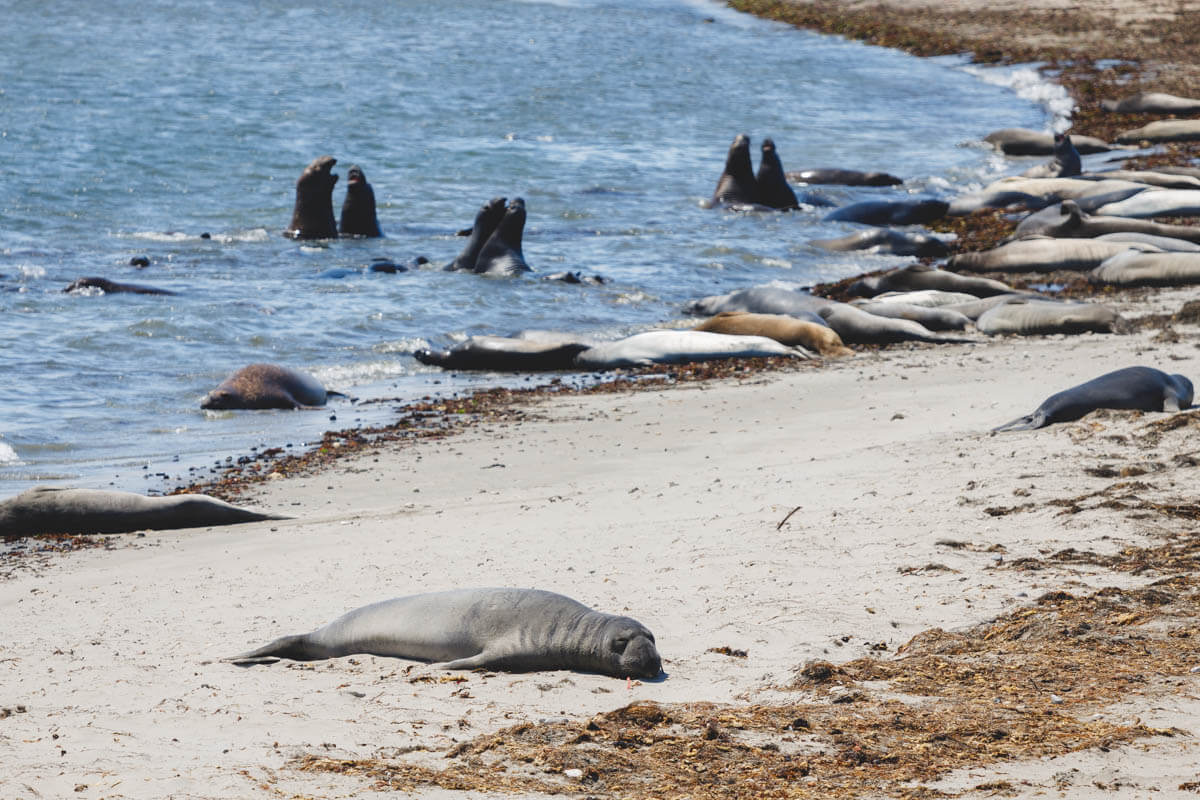
Fewer than 100 northern elephant seals were left alive by 1892. Hunters had chased them for their blubber almost to the last animal, cornering the final survivors on a remote island off Baja California. Today, up to 10,000 of their descendants haul out every year on a single beach 90 minutes south of San Francisco — and this spring, that same colony survived something that had never happened to the species before.
Psst — we made you a West Coast Adventure Map. Nearly 1,900 of our favorite spots, already pinned, ready to load into Google Maps in two clicks — grab it here.
That beach is Año Nuevo State Park in Pescadero, about 20 miles north of Santa Cruz on Highway 1, home to one of the largest mainland breeding colonies of northern elephant seals anywhere. Mexico outlawed hunting them in 1922, the U.S. followed soon after, and the population has climbed back from an estimated few dozen breeding survivors to roughly 250,000 seals across the Pacific today.
That’s a genetic bottleneck severe enough that scientists once expected it to leave the species fragile. It hasn’t — every elephant seal alive today is descended from that same small, huddled group.
Elephant seals didn’t actually settle at Año Nuevo until the 1950s. The first pup was born on the mainland there in 1975, and by the mid-1990s, local births numbered in the thousands every year.
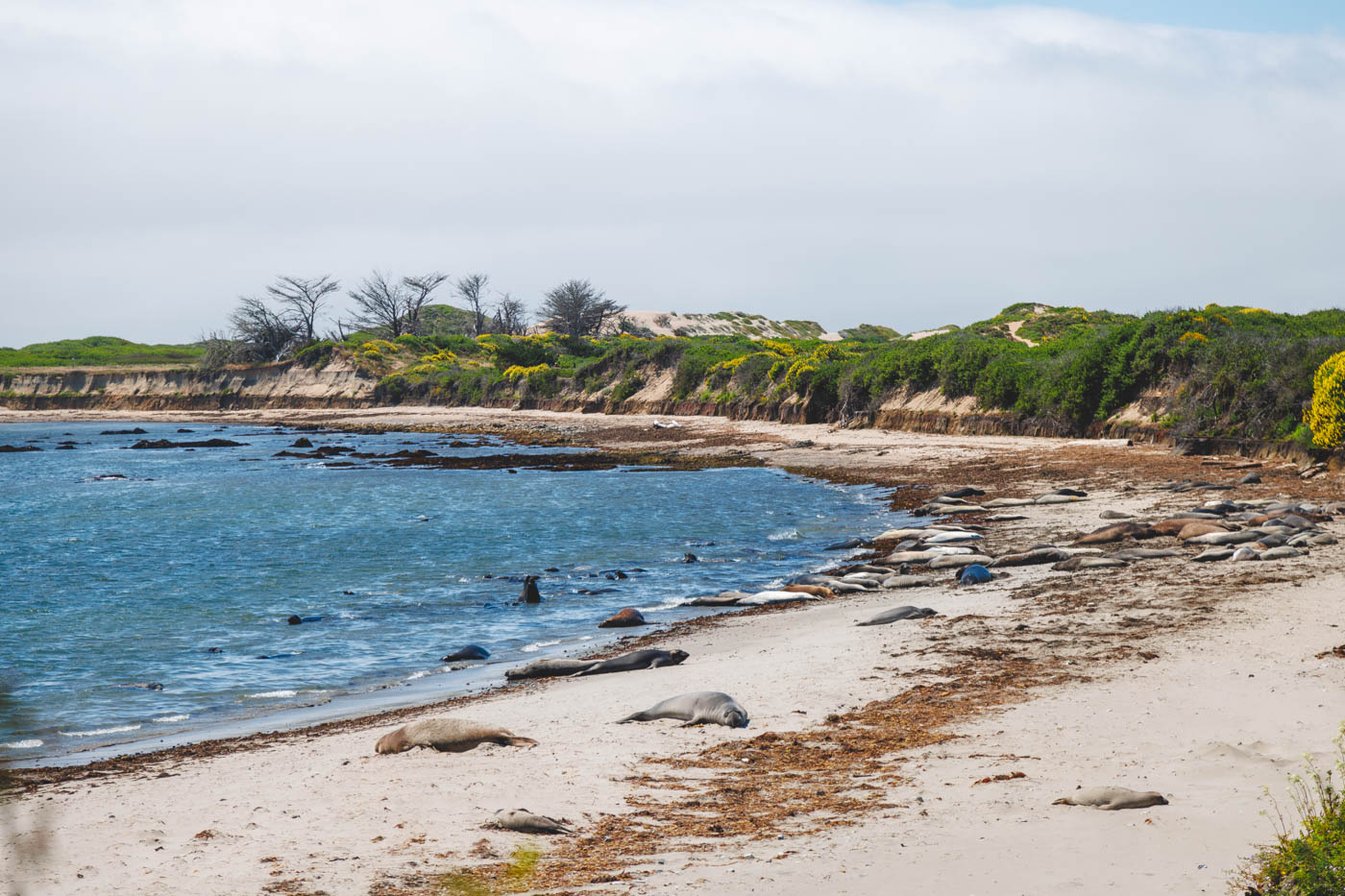
In February 2026, researchers at Año Nuevo confirmed the first case of highly pathogenic avian flu, H5N1, ever recorded in a northern elephant seal. State Parks closed the viewing areas within days. By early April, dozens of seals and sea lions along the coast had tested positive, and at least 16 elephant seals had died.
The colony held. Most of the adult females had already left on their annual migration before the outbreak hit, researchers tracked the individually tagged seals that remained through the worst of it, and the beach reopened to visitors on April 11 with no further sick or dead animals detected on the mainland for two straight weeks.
Current rules ask you to stay 30 feet from any seal or bird carcass, on top of the usual 25-foot buffer from live animals. That’s not red tape — the virus can spread between animals and people, so keep pets and curiosity at a distance and let the docents do their job.
Here’s the thing about seeing them in person: photos make elephant seals look almost cartoonish, but nothing prepares you for the sound. A 5,000-pound bull clearing his throat from thirty feet away is less “nature documentary” and more “is that a diesel engine.” Worth the sand in your boots, honestly.
July puts you square in molting season. Females and juveniles shed their coats back in May and June; older males come ashore to molt from July through August, so summer visitors mostly catch big, battle-scarred bulls lying around doing absolutely nothing, which is exactly the point of molting.
Viewing is self-guided from April through November — no reservation needed. Grab a free permit at the entrance station between 8:30 a.m. and 3:30 p.m., then walk yourself out along the Año Point Trail, a roughly 4-mile round trip that’s flat except for one stretch of soft sand dune.
Budget two and a half to three hours for the round trip, wear real shoes, and plan to be off the trail by 5 p.m. sharp, which is also when the gate closes. Day-use runs $10 per vehicle, $9 for seniors 62 and up, and there’s no camping inside the park itself.
For the rest of what’s out there — the ruins of an 1872 lighthouse just offshore, the tide pools, the rest of the trail network — our full guide to Año Nuevo State Park covers it.
Trip tips: grab a rental car to get out here, or lock in your hotel in Santa Cruz or Half Moon Bay before the good rooms are gone.
Rules and fees change — always confirm current requirements before you go.