This California beach’s sand turns purple when it rains, and Highway 1 won’t tell you where to turn
Most of Highway 1 through Big Sur is one photo opportunity after another, clearly marked and impossible to miss. Pfeiffer Beach is the opposite — no sign, no pullout, nothing to tell you it’s there unless you already know.
What’s waiting at the bottom of that unmarked road is sand that streaks lavender and plum along the waterline, especially after a storm. It’s not a filter and it’s not a rumor — it’s garnet, washed down from the cliffs above for longer than the highway’s existed.
Finding it is the first test
The turnoff is Sycamore Canyon Road, and even Los Padres National Forest’s own site admits the road is “difficult to see.” Look for it between the Big Sur Ranger Station and the post office — no arrows, no beach icon, just a narrow paved road ducking off the highway.
From there it’s 2.2 miles of single-lane driving down to a lot that holds 65 cars. On a summer weekend, that lot is often full before noon, so get there early or build in a backup plan.
📍 GET THE ULTIMATE CALIFORNIA MAP 🗺️
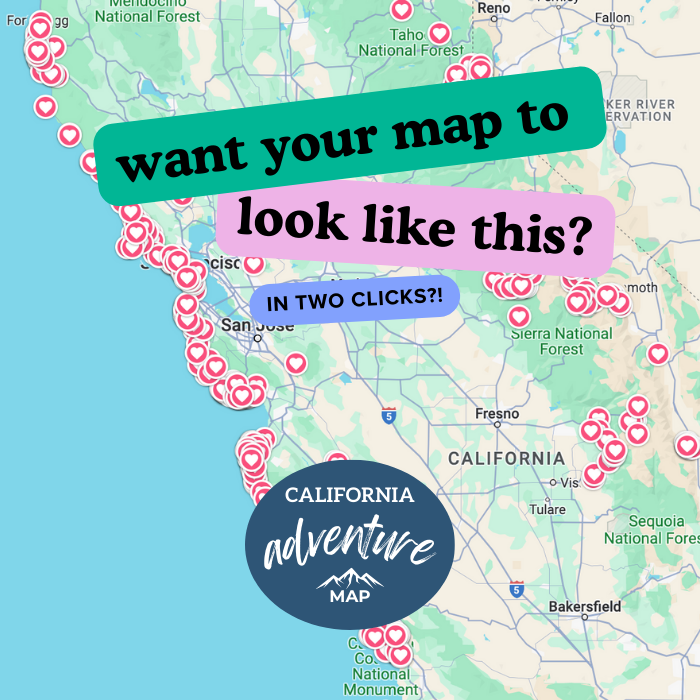
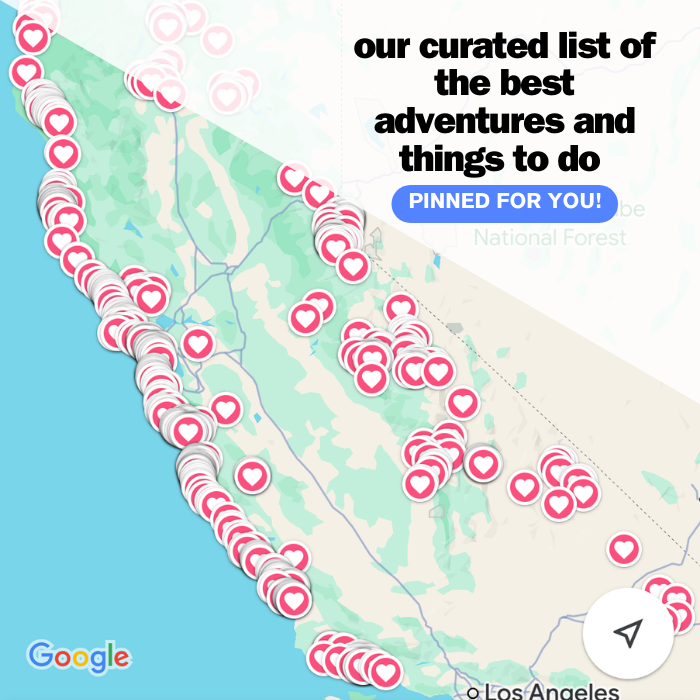
Get our curated list of the best adventures and things to do north of LA loaded onto your maps with just two clicks!
✅ Waterfalls ✅ Hikes ✅ Viewpoints
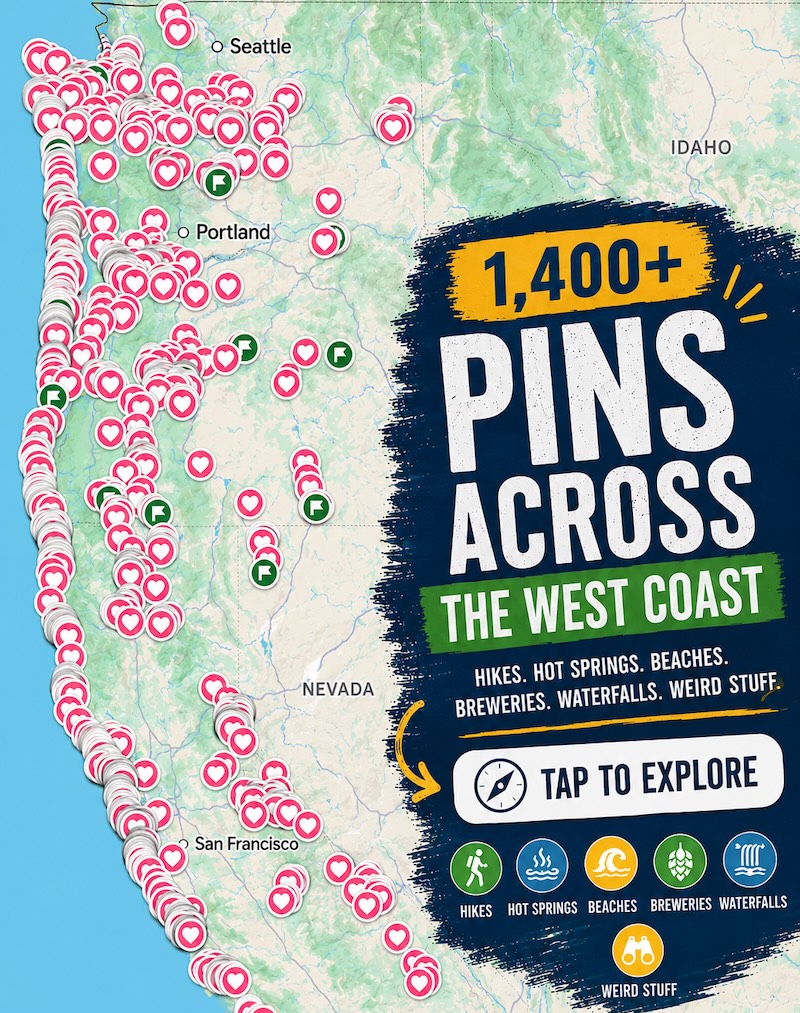
✅ National Parks ✅ 1400+ Pins
The purple isn’t a filter
The color comes from manganese garnet eroding out of the hillsides above the beach and washing down with the rain. It’s denser than the ordinary quartz sand around it, so the same waves that easily push lighter grains around leave the garnet sitting right where it lands.
That’s why the purple shows up in streaks instead of covering the whole beach evenly — it collects wherever the water’s been working the sand. It’s visible most days of the year, but it gets noticeably richer right after a storm, once fresh garnet has had a chance to wash down.
What you actually need to know before you go
Pfeiffer Beach is open 9 a.m. to 8 p.m., and the day-use fee is $15 per vehicle, paid at the lot — bring cash, since card isn’t guaranteed. One thing worth knowing if you’re carrying an America the Beautiful pass: it doesn’t cover this one. The site runs under a separate concession agreement, and interagency passes are explicitly not accepted here.
There’s no camping, no fires, no restrooms, and no potable water, so treat it as a stop rather than a full day out. Dogs are welcome on a leash no longer than six feet.
Skip the swim unless you really know what you’re doing. The water’s cold, the rocks are unforgiving, and the currents here have a real riptide reputation — wading in to look at the sand is the move, not going in past your knees.
Come back in winter for the encore
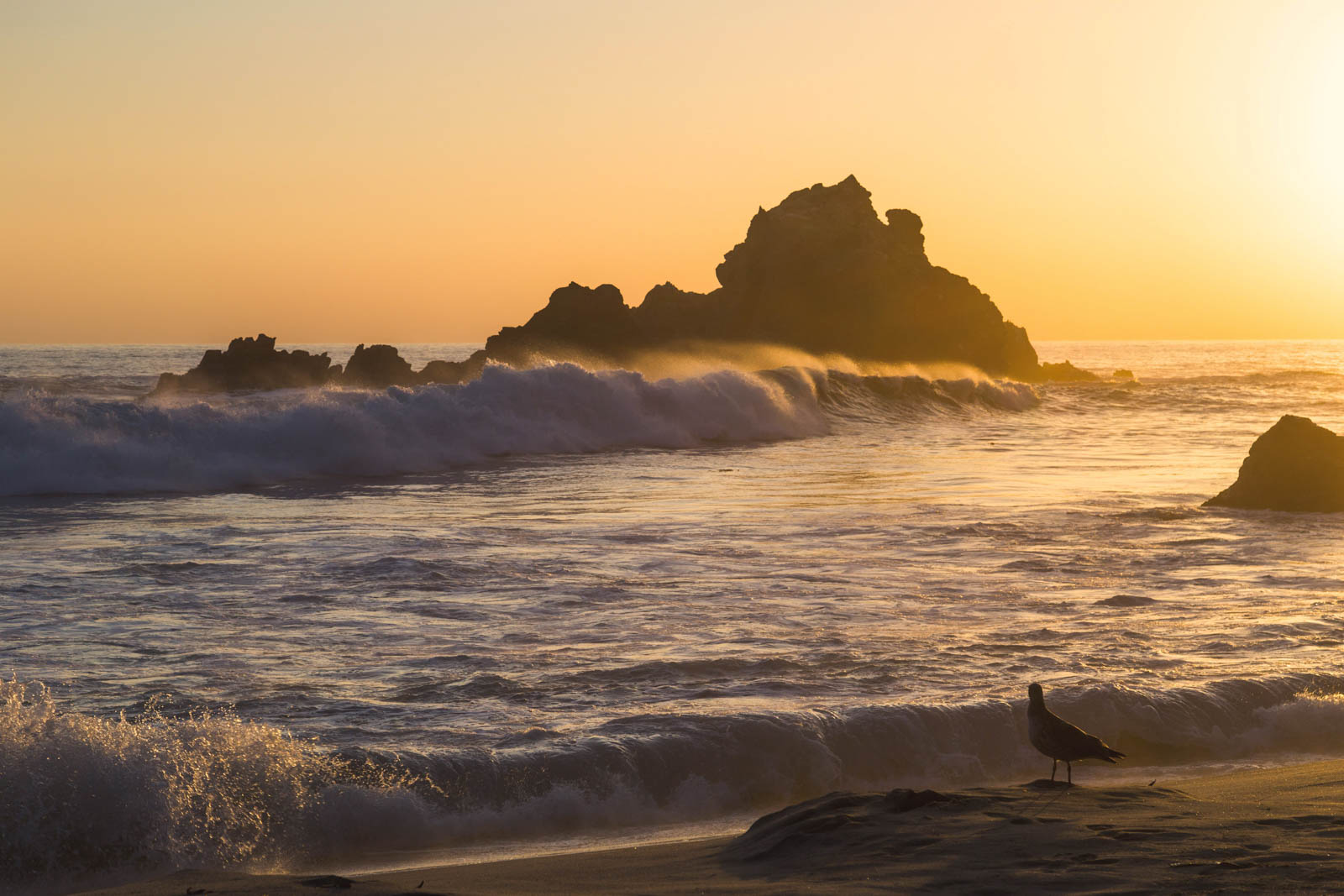
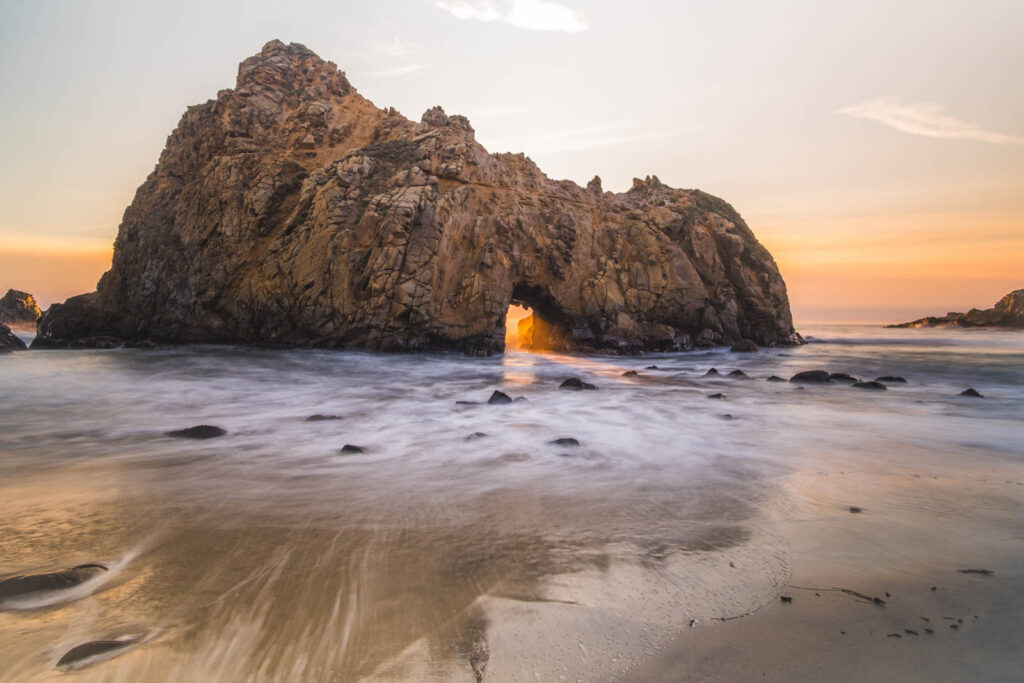
The offshore sea stack at the south end of the beach, known as Keyhole Arch, does something worth planning a return trip around. From roughly late November through January, the setting sun lines up with the hole in the rock and shoots a beam of light straight through it.
It’s not happening in July, so don’t drive down expecting it — but it’s a good excuse to put Big Sur back on the calendar once summer’s over.
Trip tips: grab a rental car to get down the coast, lock in a hotel before Big Sur books out for the weekend, or skip both and bring a camper van instead.
Rules and fees change — always confirm current requirements before you go.