This California island has had wild bison since 1924, and nobody’s fully sure why
Off the coast of Long Beach sits a California island where wild bison outnumber the roads built to reach them. They’ve been roaming the hills of Santa Catalina Island since 1924. And more than a century later, nobody — including the people paid to know — can fully agree on how they got there.
The story every islander can recite from memory: 14 bison arrived by boat that winter, shipped in for a Hollywood western based on a Zane Grey novel. The problem is the surviving footage of that film doesn’t contain a single bison, and the reels from the more likely culprit, a different Zane Grey adaptation shot the same year, have been missing for a hundred years. Even the Catalina Museum for Art & History will tell you it’s still a bit of a mystery, and probably always will be.
Whichever film it was, chewing-gum magnate William Wrigley Jr. — who’d bought the island in 1919 and owned the Chicago Cubs on the side — let the animals stay instead of shipping them back. He added more from Colorado a decade later, and the herd eventually swelled past 500.
That many bison on a 75-square-mile island came with a cost: overgrazing, erosion, and a genetics study in 2007 that turned up cattle DNA in the herd, which ended a program of relocating animals to Great Plains reservations. Catalina switched to birth control instead, starting in 2009, and the bison haven’t had a calf since 2013. Today the herd sits under 100 — smaller-bodied and scrappier-looking than their mainland cousins, by design.
Here’s the thing worth saying plainly: most day-trippers never leave Avalon’s harbor, and that’s the real miss. The bison are the single best reason on this island to actually get in a vehicle and head for the hills instead of parking yourself on a beach towel.
How to actually see them
Catalina’s interior — about 70 square miles of it — is managed by the Catalina Island Conservancy, and hiking into it requires a free permit. You can pick one up in person in Avalon, at the Airport in the Sky, at the Two Harbors Visitor Center, or register online before you go.
For better odds without the mileage, Two Harbors runs a four-hour Hummer tour — locals call it the Buffalo Safari — that winds through Cape Canyon, where sightings are close to guaranteed. It’s the same canyon the Conservancy’s own Jeep eco tours use, and it’s genuinely the easiest way to see a wild bison in California without leaving the state’s coastline.
📍 GET THE ULTIMATE CALIFORNIA MAP 🗺️
Get our curated list of the best adventures and things to do north of LA loaded onto your maps with just two clicks!
✅ Waterfalls ✅ Hikes ✅ Viewpoints
✅ National Parks ✅ 1400+ Pins
Getting there, and what else to do once you’re off the boat
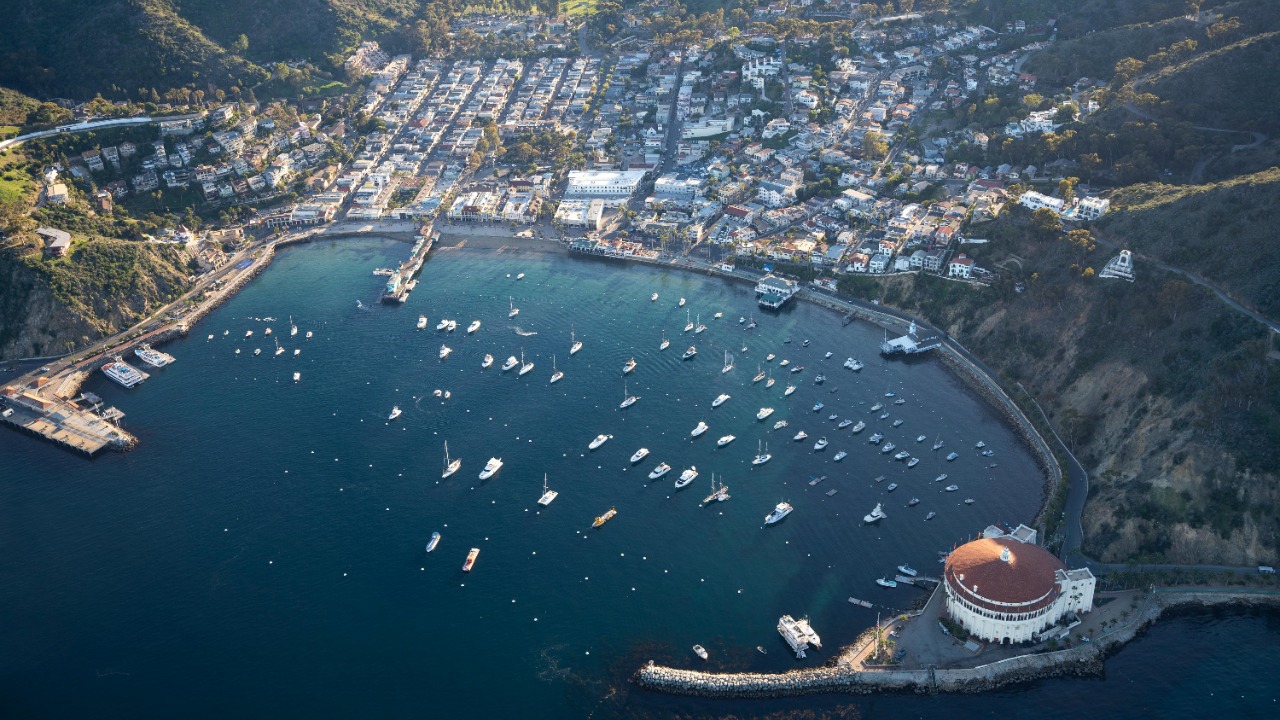
Avalon itself is worth a few hours before or after your bison run. The art deco Casino building overlooking the harbor has never hosted a single game of chance — it’s a 1929 ballroom and movie theater — and regular cars are capped on the island, so golf carts are the default way to get around town.
Snorkelers head straight for Casino Point Dive Park or Lover’s Cove, both walkable from the pier. If you want quieter and less developed, Two Harbors sits on the narrow isthmus on the island’s northwest side and feels like a different island entirely.
Ferries run up to 30 times a day via Catalina Express, departing Long Beach, San Pedro, and Dana Point for Avalon, with separate San Pedro service to Two Harbors. Crossings run about an hour from Long Beach, closer to 70 minutes from San Pedro, and around 90 minutes from Dana Point.
Trip tips: grab a rental car to get down to the ferry terminal, and lock in your hotel in Avalon before the good rooms are gone — this island fills up fast on summer weekends.
Rules and fees change — always confirm current permit requirements and ferry pricing before you go.