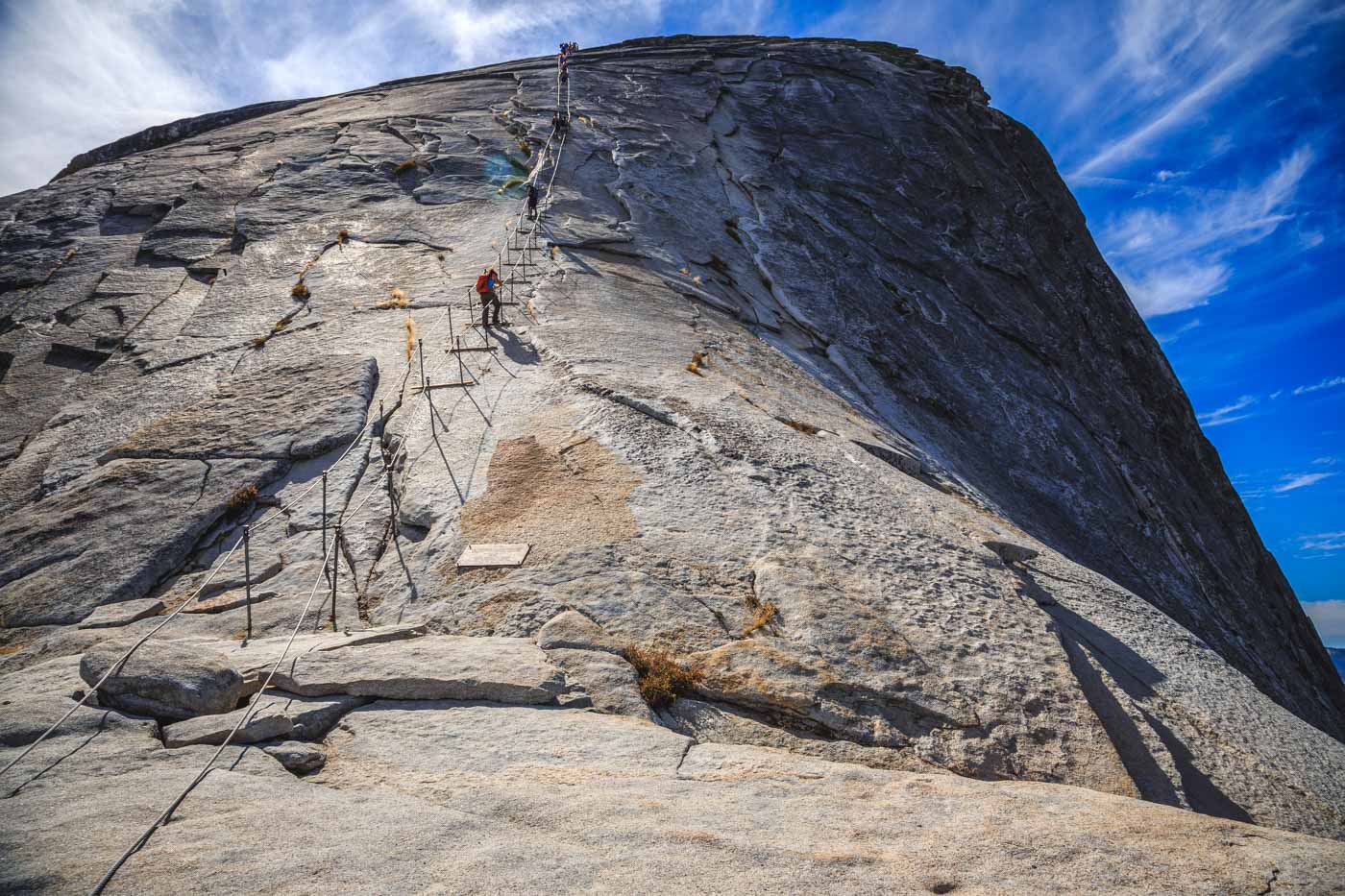
This Yosemite hike ends with two steel cables bolted into bare granite, and they come down in about six weeks
Most Yosemite hikes end at a viewpoint. This one ends with you gripping two steel cables and hauling yourself up the final 400 feet of a bare granite slope so steep and exposed that more than 20 people have died on it.
Here’s the timing that matters right now: those cables have been bolted in place since late May, and they come down the day after Columbus Day — around October 13 this year. Once park crews pull the poles for winter, the cables lie flat against the rock, and Half Dome stops being a hike and becomes a technical climb rangers actively discourage.
Psst — we made you a West Coast Adventure Map. Nearly 1,900 of our favorite spots, already pinned, ready to load into Google Maps in two clicks — grab it here.
The standard route up the Mist Trail runs 14.2 miles round trip with about 4,800 feet of elevation gain, starting from the floor of Yosemite Valley around 4,000 feet and topping out on Half Dome’s 8,846-foot summit. Budget 10 to 14 hours door to door — this is widely considered the single most demanding day hike in the park.
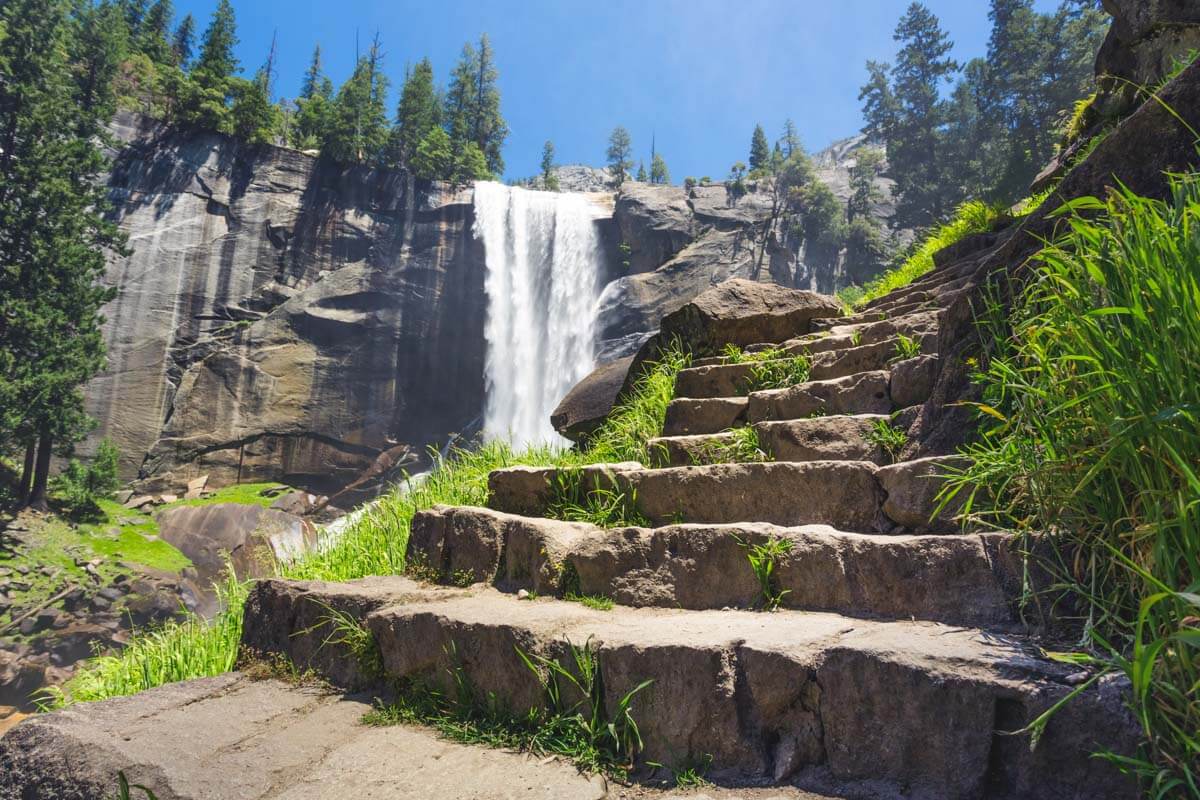
The first stretch does double duty as one of Yosemite’s best waterfall hikes — you’ll pass both Vernal Fall and Nevada Fall before the trail even turns toward Half Dome’s shoulder. If those two falls are as far as your legs want to go, that’s still a full, worthwhile day on its own.
The route itself traces back to 1875, when a Scottish mountaineer named George Anderson drilled the first eyebolts up the dome by hand and rigged a rope so others could follow him. The Sierra Club replaced that rope with steel cables in 1919, and the Civilian Conservation Corps rebuilt the whole system in 1934 — the same basic setup still bolted into the granite today.
You can’t get near the cables without a permit. The preseason lottery runs March 1 through 31 on Recreation.gov, results land in your inbox by mid-April, and it costs $10 to apply — non-refundable, whether you win or not. Get picked and you’ll pay another $10 per person, which is refundable if you cancel in time or the cables aren’t up.
Missed the March window? A smaller daily lottery opens two days before each hiking date, applications close at 4 p.m. Pacific, and results land that same night. Weekday and September/October dates run noticeably better odds than a July Saturday, if you’ve got any flexibility at all.
Yosemite charges $35 per vehicle for a seven-day pass, and since this is national park land, an America the Beautiful Pass covers your entry if you’ve already got one. The park caps the cable route at roughly 300 people a day — 225 day hikers and 75 backpackers — which is exactly why the lottery exists in the first place.
My honest take: if you can’t stomach exposed heights, skip the cables entirely and hike to Clouds Rest instead. It’s a longer approach, but you end up looking down at Half Dome from nearly a thousand feet above it — no permit required!

Weather makes or breaks this hike. Wet granite on the cables turns genuinely dangerous, and rangers close the route when lightning’s in the forecast — check Yosemite’s current conditions page the morning of, not the night before.
Still chasing a permit for this season, or saving Half Dome for next year’s lottery?
Trip tips: grab a rental car to get out here, lock in your hotel before the good rooms are gone, or skip both and book a camper van instead.
Rules and fees change — always confirm current requirements before you go.