California’s best caving isn’t a guided tour — it’s a free permit and your pick of two dozen lava tubes
Most national park sites hand you one marked trail and a ranger telling you where you can and can’t go. Lava Beds National Monument hands you a free permit, points you toward the Cave Loop Road, and tells you to pick one.
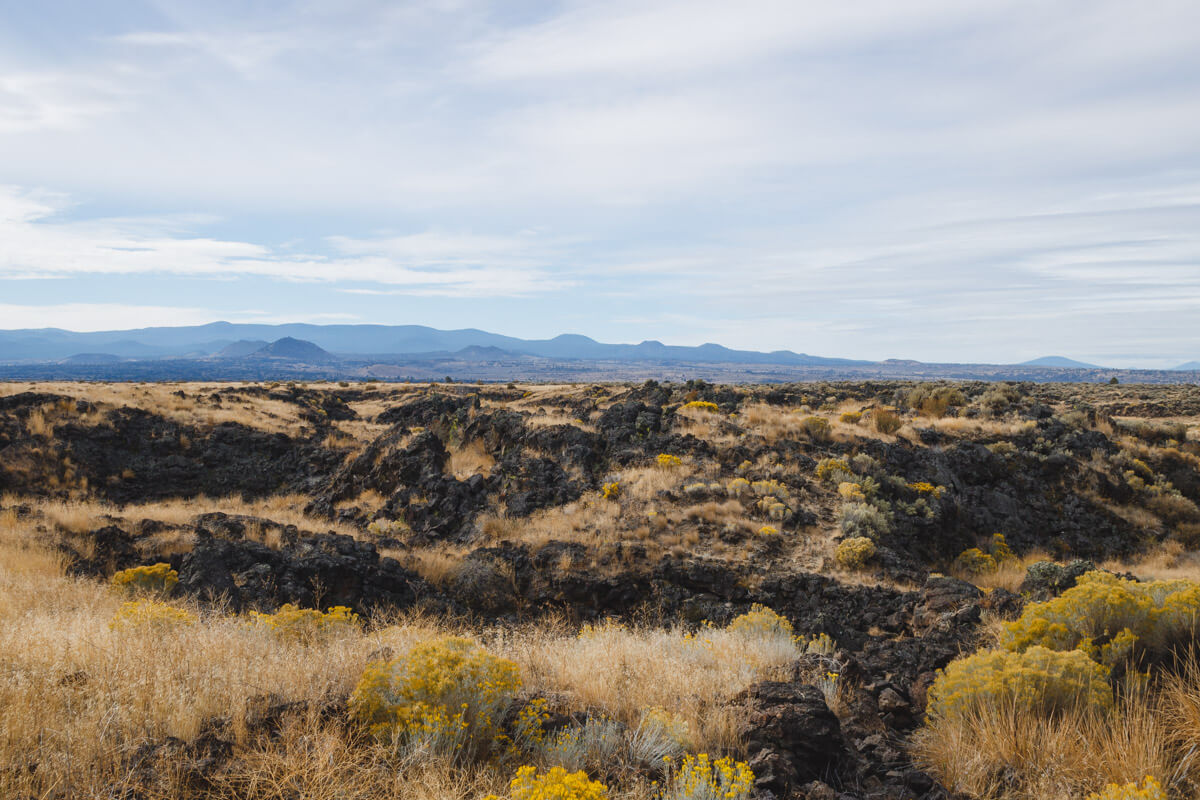
This is the largest concentration of lava tube caves in North America — more than 500 of them under a volcanic plain in California’s far northeast corner, with about two dozen marked well enough to just walk into. We’ve explored several ourselves, and the freedom to choose your own difficulty level, with no set path and no tour group in front of you, is most of the appeal.
Psst — we made you a West Coast Adventure Map. Nearly 1,900 of our favorite spots, already pinned, ready to load into Google Maps in two clicks — grab it here.
Why this corner of California stays so quiet
Lava Beds sits in Siskiyou and Modoc counties, pressed up against the Oregon border and closer to Klamath Falls than to any California city most people could name off the top of their head. It’s about an hour from Klamath Falls, and roughly 1.5 to 2 hours from the I-5 corridor near Weed.
There’s no gas, food, or lodging inside the monument’s 46,000 acres. The closest services sit 20 to 30 minutes away in Tulelake, California, or Merrill, Oregon, which means almost everyone who makes the drive out here actually wants to be here.
📍 GET THE ULTIMATE CALIFORNIA MAP 🗺️
Get our curated list of the best adventures and things to do north of LA loaded onto your maps with just two clicks!
✅ Waterfalls ✅ Hikes ✅ Viewpoints
✅ National Parks ✅ 1400+ Pins
One free permit gets you into any of them
Every cave requires a caving permit, and it costs nothing — pick one up at the visitor center during operating hours. The point isn’t to gatekeep; it’s to make sure you’re prepared and to stop a fungus that kills bats from hitching a ride between caves on your boots.
Start at Mushpot Cave. It’s a paved, lit, 524-foot walk from the visitor center and the only cave in the monument with lighting installed, which makes it the obvious warm-up before you commit to carrying your own flashlight into the dark.
Where to go once your eyes adjust
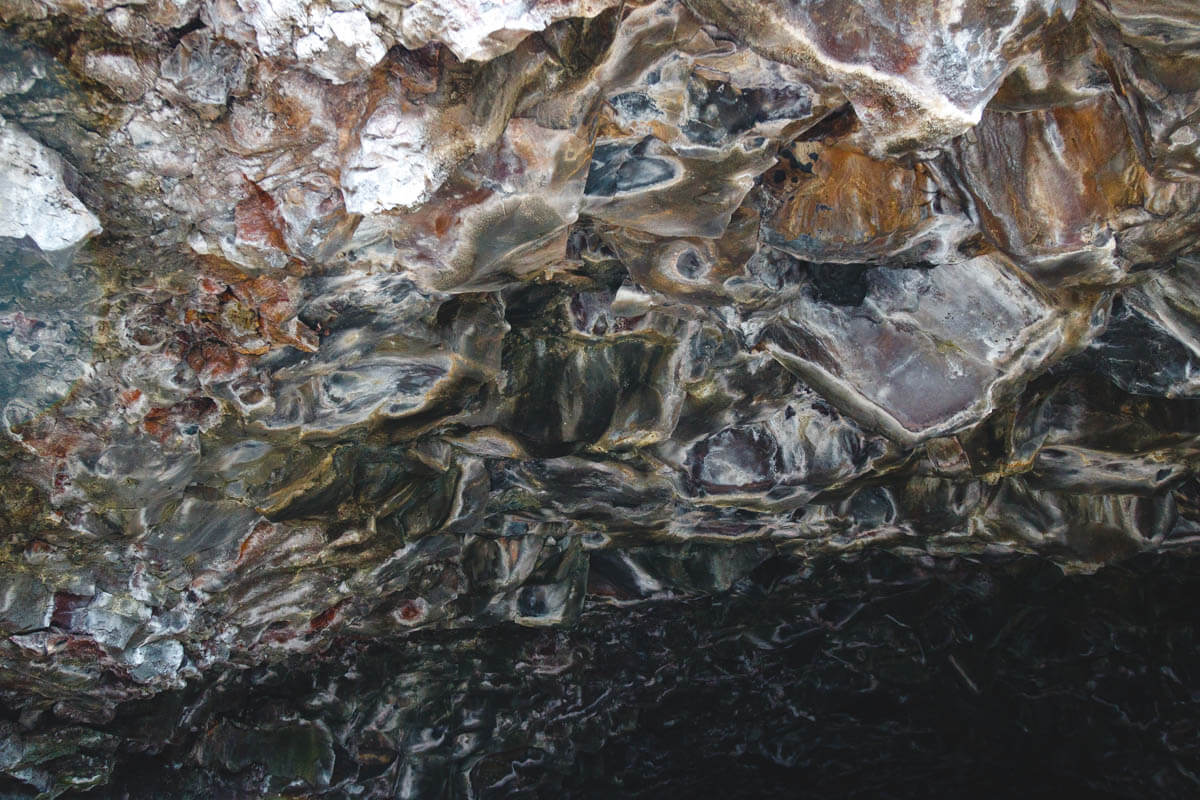
Valentine Cave is the best second stop, with smooth, organic walls that still look like the day the lava cooled. Skull Cave is next up — a massive chamber with a year-round ice floor at the bottom, which is honestly wonderful on a hot summer afternoon.
Golden Dome Cave gets its name from a ceiling that glows gold where light reflects off water droplets beading on a bacteria coating — beautiful, but don’t touch it, since it damages easily. If you want the real challenge, Catacombs Cave runs 6,903 feet, the longest in the monument, though the ceiling drops below a foot in places and the park doesn’t recommend it for inexperienced cavers.
The rock art and the war fought in this exact lava field
Petroglyph Point holds one of the largest panels of Native American rock art in the country, carved into tuff that formed roughly 275,000 years ago when cinders erupted through the shallow water of what’s now Tule Lake. The Modoc people have deep ties to this landscape long before it was a national monument.
Captain Jack’s Stronghold marks where that history turns heavier. During the Modoc War of 1872-73, a band led by Kintpuash — known as Captain Jack — used this natural lava fortress to hold off U.S. Army forces roughly ten times their number for five months. A short loop trail (0.6 miles for the inner loop, 1.1 for the outer) winds through the stronghold with interpretive signs telling the story.
One hike worth doing before you leave
Schonchin Butte Lookout Trail is short and sustained — 1.5 miles round trip with about 465 feet of climbing, rated moderate — and it ends at a staffed fire lookout with sweeping 360-degree views over the cinder cones and lava flows. On a clear day, you can pick out Mount Shasta on the horizon.
🏨 Need a place to crash nearby?
From rustic cabins to boutique inns—check prices and availability in just a click.
Before you go
Entrance runs $25 per vehicle for seven days, or free with the America the Beautiful Pass since this is federal land. Indian Well Campground charges $20 a night if you want a site with amenities, and free backcountry camping is allowed with no permit needed.
Bring real light sources — a headlamp plus a backup flashlight, not your phone — and a helmet, since head bumps are the most common injury underground. Pack a jacket even in the middle of summer; the desert above ground can hit the 90s while the caves stay genuinely cold.
If you’re building this into a bigger trip, the rest of the Mount Shasta area is close enough to fill out the rest of your week. Pick a cave, grab a flashlight, and go find out why this corner of the state has stayed this empty for a century.
Trip tips: grab a rental car to get out to this remote corner of the state, lock in a hotel in Klamath Falls or Tulelake, or skip both and book a camper van and stay right at the campground.
Rules and fees change — always confirm current requirements before you go.