California’s largest seabird colony lives 28 miles off San Francisco, and almost nobody’s allowed to set foot there
Twenty-eight miles past the Golden Gate, a scatter of jagged rock rises straight out of open ocean — and you can look, but you can’t touch. The Farallon Islands hold the largest seabird nesting colony south of Alaska, and almost the entire refuge has been off-limits to visitors since 1909. There’s exactly one way to see it now, and it doesn’t involve setting foot on land.
The refuge actually came together in two pieces. Theodore Roosevelt protected the North and Middle Farallones plus a rock called Noonday in 1909, but the southern islands — where the lighthouse and most of the wildlife actually are — weren’t folded in until 1969. Ever wonder what a place looks like after more than a century of nobody living there on purpose? This is close to the answer.
Psst — we made you a West Coast Adventure Map. Nearly 1,900 of our favorite spots, already pinned, ready to load into Google Maps in two clicks — grab it here.
More than 300,000 common murres alone crowd onto these rocks every breeding season, packed in alongside cormorants, storm-petrels, and tufted puffins. It’s the kind of seabird density most people picture happening somewhere near Antarctica, not a couple hours off a Bay Area coastline.
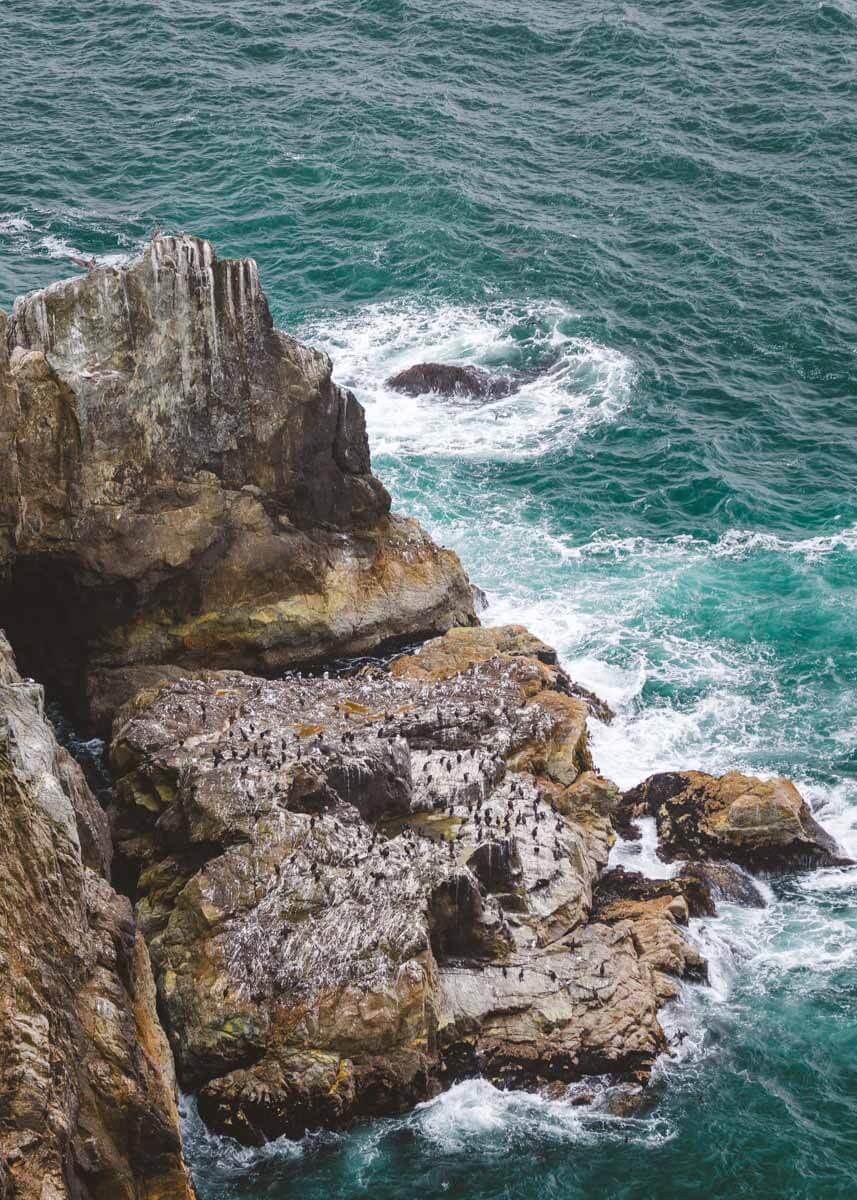
That abundance used to draw a very different crowd. Gold Rush-era San Francisco paid close to a dollar apiece for murre eggs hauled off these rocks, and by 1863 rival egg companies were exchanging gunfire over who got to collect them. Two men died in that fight — over eggs, on this exact patch of ocean.
The water around the islands has its own reputation, too. This stretch of coast, running roughly from Bodega Bay down to Big Sur, gets called the Red Triangle for its concentration of great white shark activity, drawn in by the seals and sea lions that haul out here by the thousands. It’s not a swimming beach — it’s a research station surrounded by apex predators, and that’s kind of the point.
My honest take: don’t bother trying to spot the islands from Ocean Beach on a clear day. You’ll get a hazy bump on the horizon and nothing else — if you actually want the experience, you book the boat.
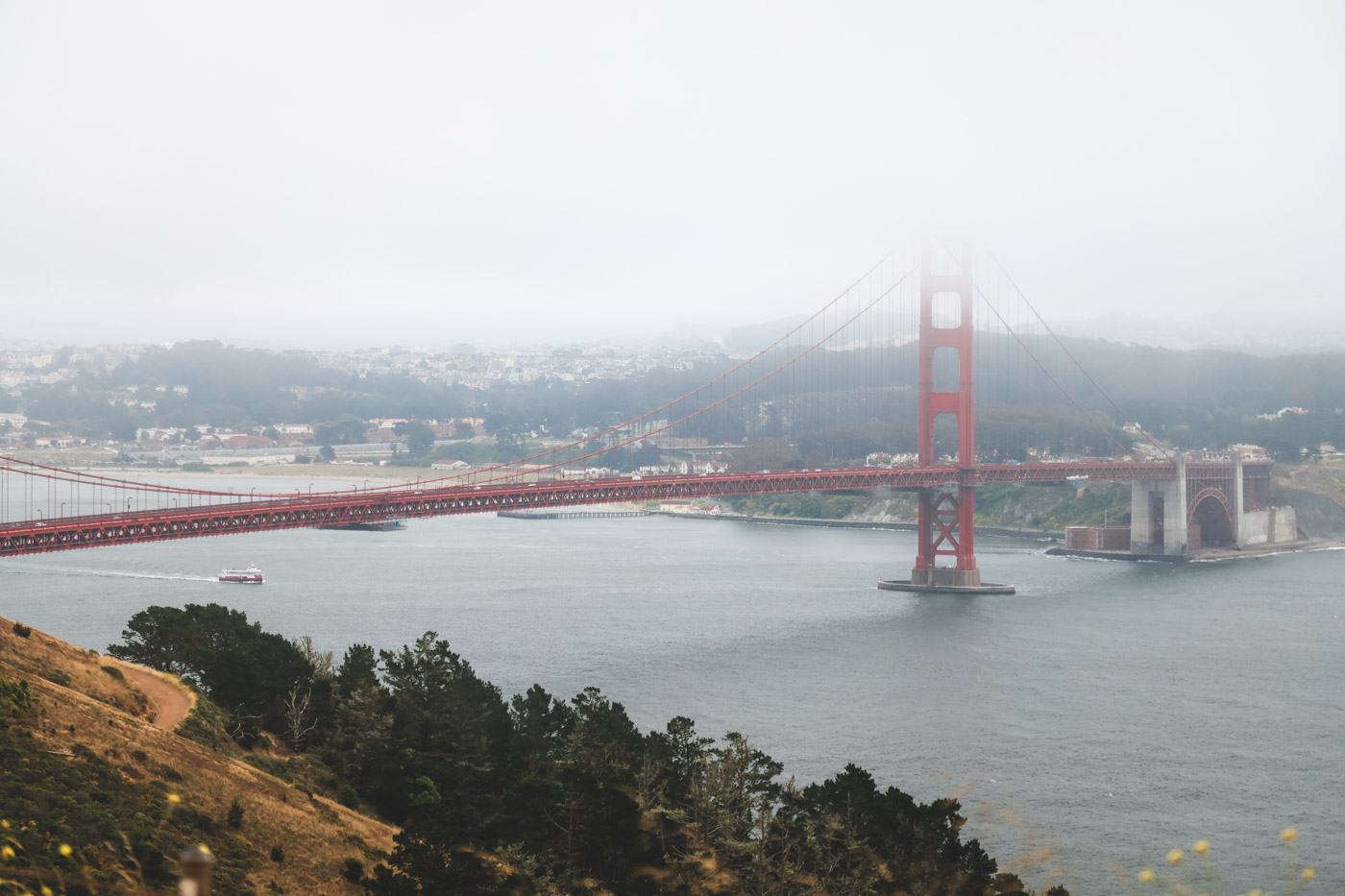
From May through November, Oceanic Society runs full-day trips out of San Francisco, sailing beneath the Golden Gate Bridge before a couple of hours of open water to the refuge boundary. July through October is prime time, when humpback whales linger offshore fattening up on krill before heading south for the winter. Bring the seasickness medication — the swells past the headlands catch more people off guard than you’d expect.
Prefer solid ground? You can still catch part of the same migration without the crossing. The bluffs at Point Reyes line up with this stretch of ocean, and watching from a headland beats fighting seasickness for plenty of people.
Trip tips: grab a rental car to get to the dock, or lock in a hotel nearby if you’re turning it into a full San Francisco weekend.
Rules and fees change — always confirm current tour schedules and access requirements before you go.