Death Valley’s most famous haul wasn’t gold, and the wagons that dragged it 165 miles still sit off the highway
The most famous thing ever hauled out of Death Valley wasn’t gold. It was borax, a crusty white mineral workers scraped off the valley floor, and it left behind one of the best roadside history stops in the whole park.
Harmony Borax Works takes about half an hour to see, and the wagons are still sitting right where you can walk up to them. Now that the brutal summer heat is behind us, it’s the perfect warm-up stop for a fall desert trip.
Psst, we made you a West Coast Adventure Map. Nearly 1,900 of our favorite spots, already pinned, ready to load into Google Maps in two clicks: grab it here.
Eighteen mules, two horses, 36 tons
Picture this rolling across the salt flats: a team of 18 mules and two horses pulling a train of giant wagons that weighed about 73,000 pounds fully loaded. That’s the famous twenty-mule team, and it really did look that ridiculous.
The teams hauled borax roughly 165 miles across the desert to the railroad in Mojave. One way took around ten days, and the wagons were built so tough that none of them ever broke down on the trail.
The operation was so iconic that it became the name of a borax brand, 20 Mule Team Borax. Not bad for a bunch of mules.
📍 GET THE ULTIMATE CALIFORNIA MAP 🗺️
Get our curated list of the best adventures and things to do north of LA loaded onto your maps with just two clicks!
✅ Waterfalls ✅ Hikes ✅ Viewpoints
✅ National Parks ✅ 1400+ Pins
A boom that lasted five years
Harmony Borax Works started processing in late 1883 or early 1884, according to the National Park Service. At full tilt it employed 40 men and turned out three tons of borax a day, and most of the labor was likely done by Chinese workers who gathered the raw mineral from the valley floor.
Summer was a problem, even back then. The processing water couldn’t cool down enough in the heat, so the whole crew packed up and moved to another plant near present-day Tecopa for the hot months.
The plant closed in 1888 when the owner’s finances collapsed. The adobe ruins and the wagons are all that’s left, and the site has been on the National Register of Historic Places since 1974.
The wagons you can walk right up to
Here’s why this stop matters more than it looks. In April 2024, a fire destroyed a different historic twenty-mule team wagon that sat behind the Borax Museum at a private resort inside the park.
The set at Harmony survived, and according to Smithsonian Magazine it has the most original material of any twenty-mule team wagons still in existence. Standing next to those huge wooden wheels, you start to get just how wild that 165-mile haul was.
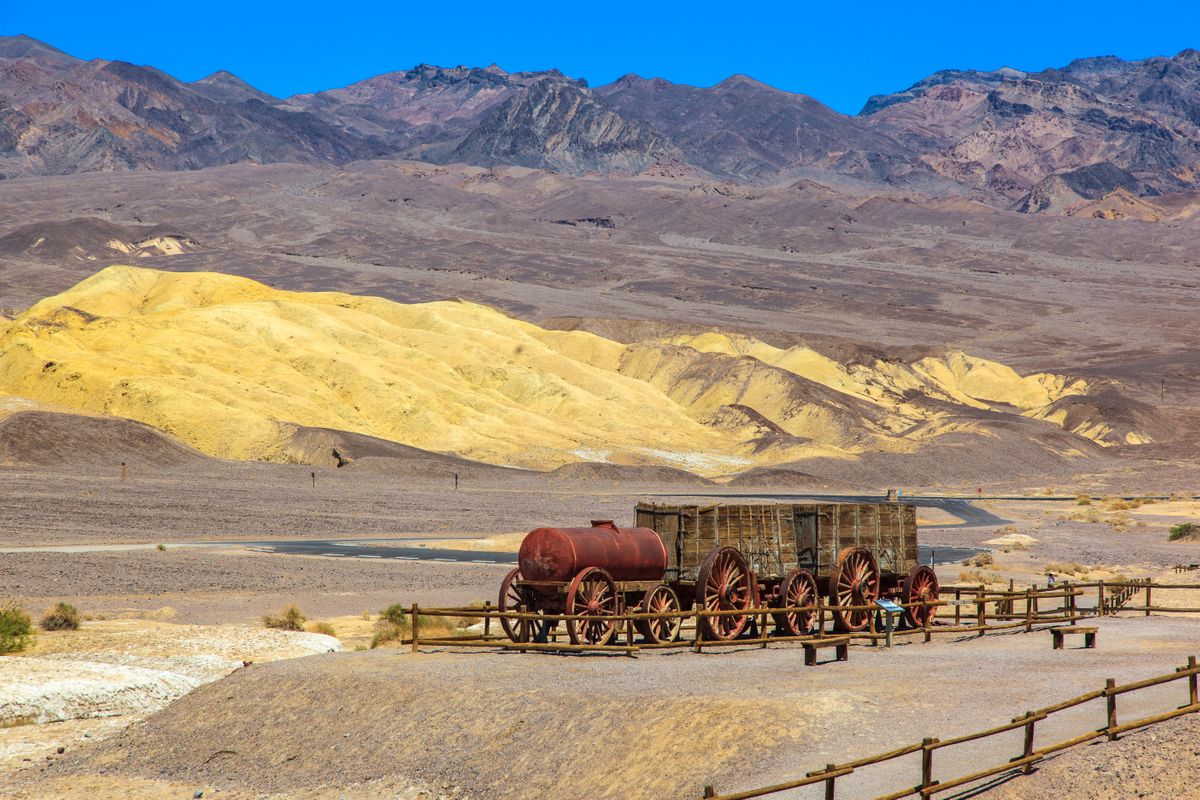
The paved loop is just 0.4 miles round trip with about 50 feet of elevation gain, and the park lists it as wheelchair accessible. Signs along the way cover how borax was processed, who drove the teams, and what life was like out here.
It’s about a mile west of Furnace Creek on Highway 190. There are no restrooms at the site, so use the ones at the Furnace Creek Visitor Center first, and leave the dog in camp since pets aren’t allowed on park trails.
Keep the theme going in Twenty Mule Team Canyon
If you want more than a quick stroll, don’t skip this: drive Twenty Mule Team Canyon on the way out. It’s a 2.5-mile one-way dirt road that starts just east of Zabriskie Point, winding through bare, wrinkled hills that look like someone crumpled up the desert.
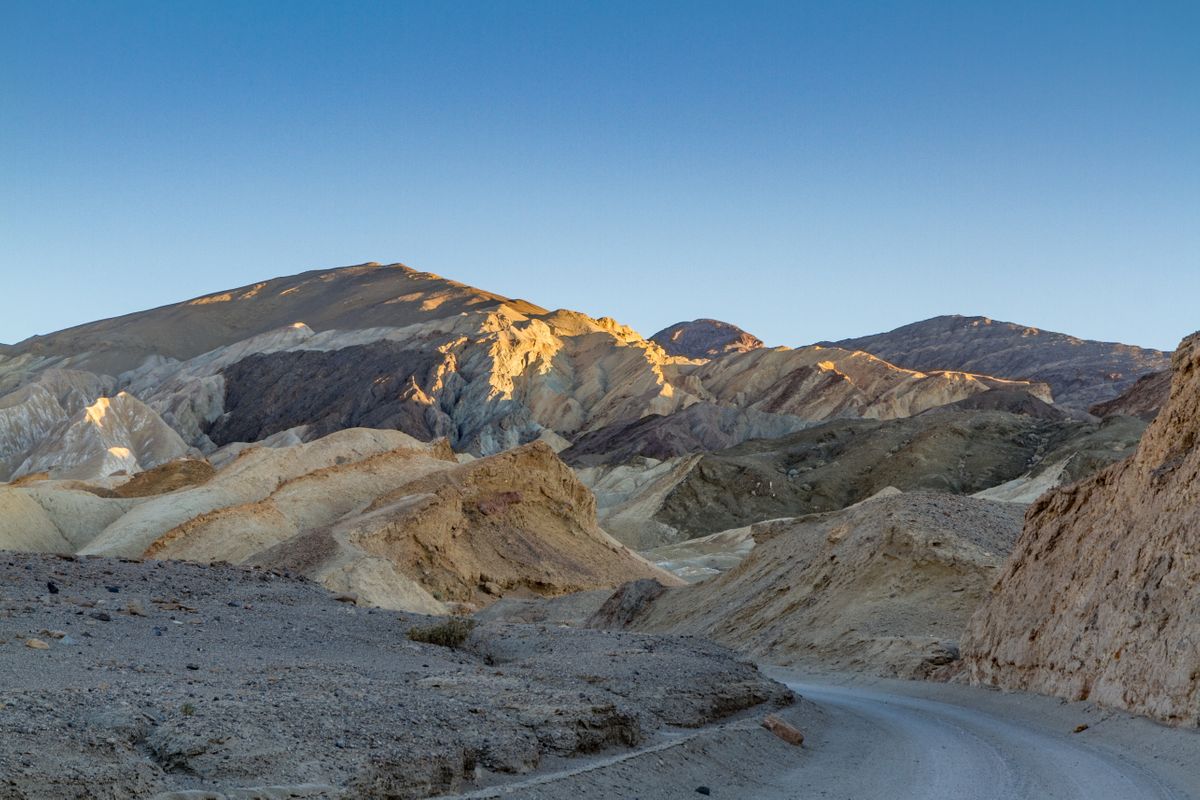
The Park Service says the road is usually fine for most cars, but skip it in anything with especially low clearance and check with a ranger about conditions. It’s also a nice way to dodge the crowds at Zabriskie Point.
Want to turn it into a full day? Our list of the best hikes in Death Valley has plenty more trails within a short drive of Furnace Creek.
Before you go
Death Valley charges $30 per private vehicle, good for seven days. If you’ll be hitting a few federal parks this year, an America the Beautiful Pass covers the entrance fee here.
Even in fall, the desert sun is no joke, so bring more water than you think you need. The Park Service has current safety guidance worth a quick read before you head out.
Trip tips: grab a rental car to get out here, lock in your hotel before the good rooms are gone, or skip both and book a camper van instead.
Would you have signed up to drive a twenty-mule team across Death Valley, or would you be the one hiding out at the Tecopa plant all summer? Let us know in the comments!
Rules and fees change, so always confirm current requirements before you go.