Point Reyes is the windiest spot on the Pacific Coast, and its lighthouse hides 313 steps down a cliff to dodge the fog
Most lighthouses want to be as high as possible. The one at Point Reyes was built about 300 feet down the face of a cliff on purpose, and once you stand up top in the wind, you’ll understand exactly why.
According to the National Park Service, Point Reyes is the windiest place on the Pacific Coast and the second foggiest place on the North American continent. So yes, the walk to the lighthouse is a little wild. That’s the whole fun of it!
Psst, we made you a West Coast Adventure Map. Nearly 1,900 of our favorite spots, already pinned, ready to load into Google Maps in two clicks: grab it here.
Why they built it halfway down a cliff
The fog here tends to sit high, which is a terrible problem when your entire job is being seen from the water. So the builders blasted a flat ledge into the rock roughly 300 feet below the top of the headland, low enough for the light to shine out underneath the fog.
The light first shone on December 1, 1870. It kept working for 105 years, until the Coast Guard swapped in an automated light in 1975.
Life down there was rough. The park calls it an undesirable post, between the hard work, the isolation, and wind so strong that keepers sometimes had to crawl. Winds of 60 mph are common here, and the highest recorded gust hit 133 mph.

📍 GET THE ULTIMATE CALIFORNIA MAP 🗺️
Get our curated list of the best adventures and things to do north of LA loaded onto your maps with just two clicks!
✅ Waterfalls ✅ Hikes ✅ Viewpoints
✅ National Parks ✅ 1400+ Pins

The 6,000-pound lens that came from France
The star of the show is inside the little tower. It’s a first-order Fresnel lens, built in France in 1867 and shipped to San Francisco, split into 24 glass panels that threw 24 beams of light out to sea.
Here’s the part I love: it ran on clockwork. A 170-pound weight on a hemp rope dropped 17 feet over about two hours and twenty minutes, spinning the 6,000-pound lens once every two minutes for a flash every five seconds. Somebody had to wind it back up through the night, every night.
The lens and clockwork were taken out, refurbished, and put back during a restoration that wrapped up in November 2019. The clockwork room opens when staffing and weather allow, so check the park calendar if you want a closer look.
The walk down (and the climb back up)
From the parking lot, it’s about 0.65 miles to the lighthouse, so figure around 1.3 miles round trip. The first stretch is a walk out to the visitor center and observation deck, past cypress trees bent sideways by decades of wind.
Then come the stairs: 313 of them, dropping roughly 240 feet below the observation deck. Going down feels great. Coming back up is where you find out how your legs are really doing, so take it slow and stop for the view as often as you like.
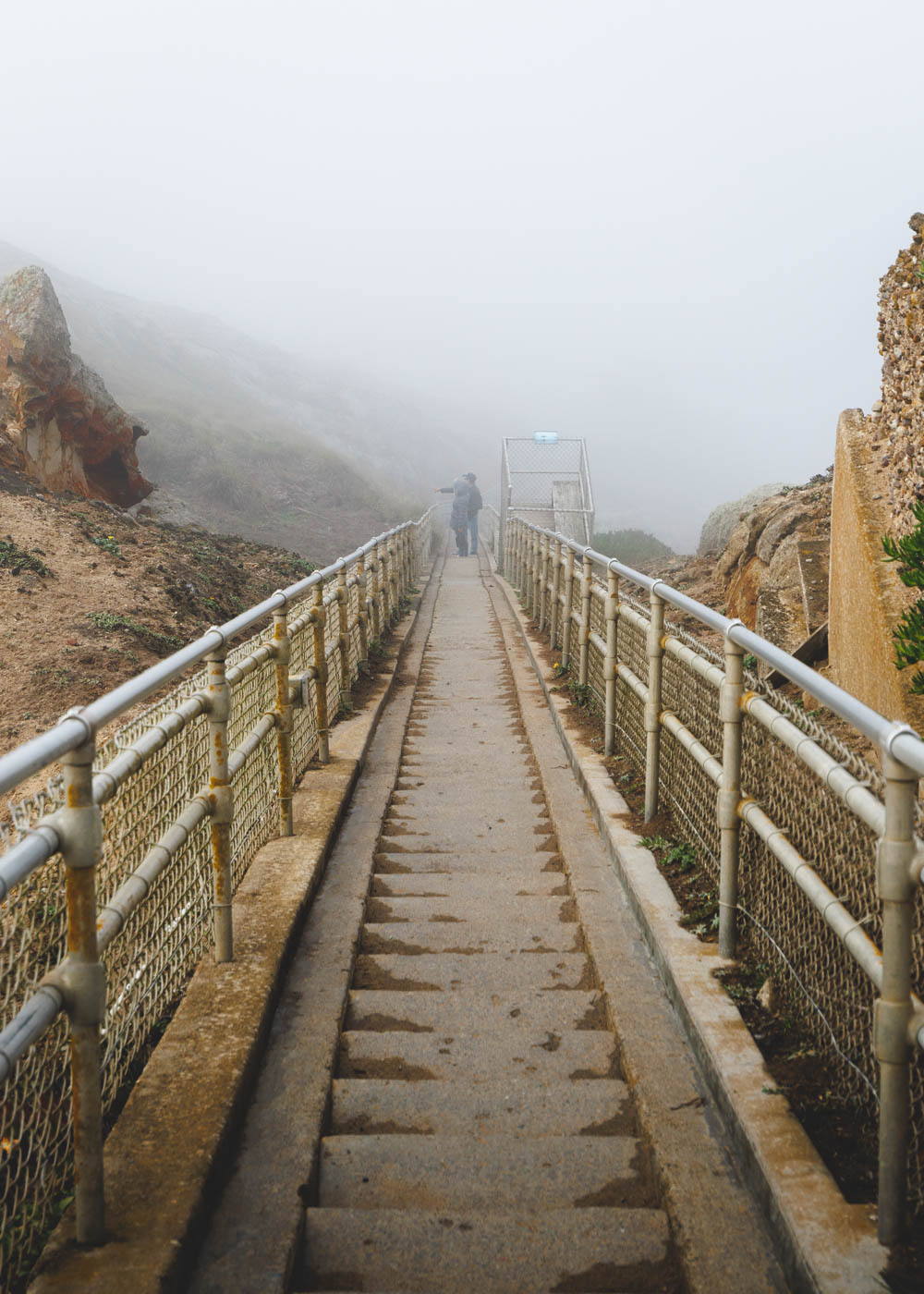
A few things worth knowing before you go. The stairs close promptly at 4 pm, and they also shut whenever winds top 40 mph, which is not a rare event out here. Pets aren’t allowed (service dogs are the exception), and the lot only fits 38 vehicles, with RVs and trailers parking along the road.
Our day out here was socked in with fog, and you know what? It felt right. The windswept trees, the gray sea, the foghorn mood of it all. A clear day gets you the view, but a foggy one gets you the story.
When to go
The observation deck doubles as a whale-watching spot, and the Park Service says gray whales migrate past Point Reyes from December through May. Bring binoculars and some patience, and scan for spouts out past the rocks.
Come spring, the cliffs below also fill up with common murres, and the colony can reach around 20,000 birds. Either way, dress in layers, because the weather out on the headland does whatever it wants.

Good news for your wallet: there’s no entrance fee at Point Reyes National Seashore. Make a full day of it with our list of things to do in Point Reyes, or lace up for one of our favorite Point Reyes hikes.
Trip tips: grab a rental car to get out here, lock in your hotel before the good rooms are gone, or skip both and book a camper van instead.
Would you rather catch this lighthouse on a crystal-clear whale-watching day or wrapped in full fog? Tell us which one you’re holding out for!
Rules and fees change, so always confirm current requirements before you go.