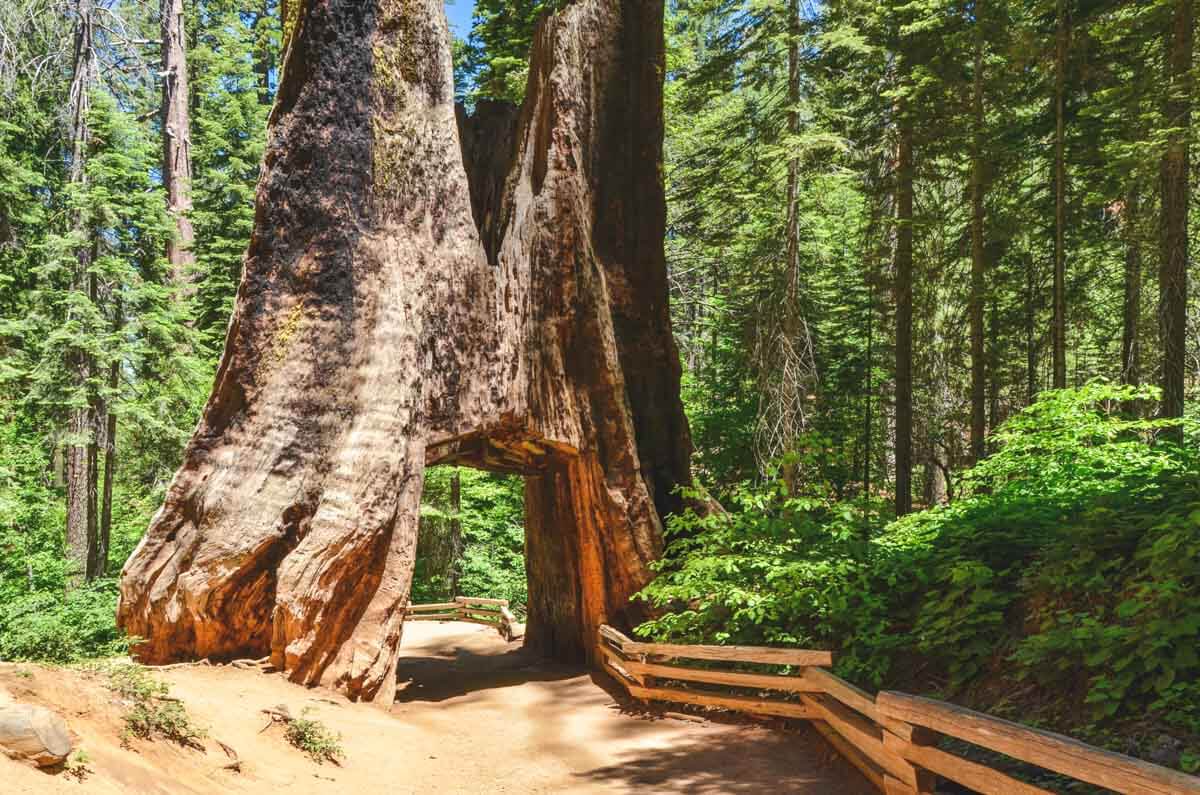
Stagecoaches once drove straight through this dead Yosemite sequoia, and the old road to it is still open to hikers this winter
Here’s a Yosemite tree you’re allowed to walk through, and it was already dead when someone cut the hole. In 1878, a crew sawed a 12-foot-high tunnel through a burned-out sequoia in the Tuolumne Grove so stagecoaches could roll right through it.
It’s often called the first giant sequoia tunnel tree, and the road those stages used is now a quiet foot trail. Tioga Road just shut for the winter, but this grove sits right at the edge of the closure, so you can still get there.
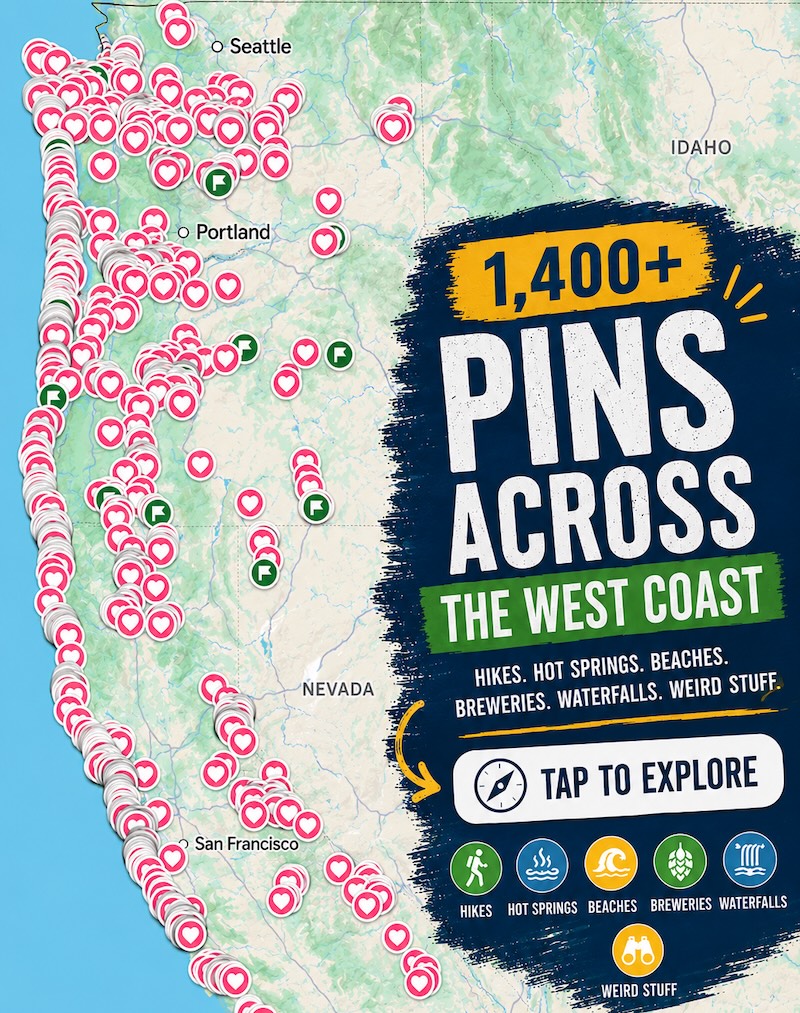
Psst, we made you a West Coast Adventure Map. Nearly 1,900 of our favorite spots, already pinned, ready to load into Google Maps in two clicks: grab it here.
A burned-out giant gets a doorway
The tree is called the Dead Giant, and it measures nearly 30 feet across at the base. Fire had hollowed it out long before the tunnel crew showed up, which is how a charred snag turned into a tourist magnet.
William McCarthy and brothers James and Dave Lumsden cut the opening big enough for stages and wagons. Coaches carrying visitors between Crane Flat and Yosemite Valley drove straight through it, which had to be a pretty great selling point for a long, dusty ride.
John Muir came through the grove in 1869, years before the tunnel, and sketched the hollow giant. That drawing is believed to be among his earliest of a sequoia.
📍 GET THE ULTIMATE CALIFORNIA MAP 🗺️
Get our curated list of the best adventures and things to do north of LA loaded onto your maps with just two clicks!
✅ Waterfalls ✅ Hikes ✅ Viewpoints
✅ National Parks ✅ 1400+ Pins
The road that ran through the big trees
The trail follows the Old Big Oak Flat Road, one of the first roads into Yosemite Valley. Its route swung travelers right through the grove on purpose, because nothing sells a stage ticket like a forest of giants.
Today the grove holds about 25 mature sequoias. That’s small next to Mariposa Grove, but it also means a quieter walk and more room to stand under a trunk without photobombing anybody.
The hike: easy going down, honest coming back
Here’s the twist: it’s a backwards hike. You drop about 500 feet over the first mile on the old road bed, shaded by sugar pines and white firs, then pay it all back on the climb out.
The round trip runs about 2.5 miles, and once you reach the grove, a half-mile nature loop winds past the Dead Giant and the rest of the big trees. Plan on 1 to 2 hours, plus extra time for staring straight up.
On the way down, you’ll pass through forest scarred by the 2013 Rim Fire. Then the sequoias show up, that cinnamon bark glowing between the firs, and you step inside a tree that stagecoaches once squeezed through. It’s honestly the best way to feel how big a sequoia really is, no car required.
Want more trails while you’re in the park? Here are our favorite hikes in Yosemite.
Why it’s worth going now
Tioga Road closed for the season in mid-November, and it usually stays shut until late May or June. The closure starts just east of the Tuolumne Grove, though, so the trailhead lot on Tioga Road near Crane Flat stays in play.
The park keeps the grove open year-round, but once snow sticks, it notes you may need skis or snowshoes. That might be the prettiest version of this walk anyway: red bark, white ground and a whole lot of quiet.
Before you go
Yosemite charges an entrance fee, and an America the Beautiful pass covers it. Big Oak Flat Road stays open all winter, but tire chain rules kick in during storms, so check the park’s current conditions page before you drive up.
Trailhead parking is limited, there’s no drinking water on the trail, and dogs aren’t allowed on it. Pack a full bottle for that climb back.
Staying the night? Here’s our guide to where to stay in Yosemite, plus a few more things to do in Yosemite to round out the trip.
Trip tips: grab a rental car to get out here, lock in your hotel before the good rooms are gone, or skip both and book a camper van instead.
Rules and fees change, so always confirm current requirements before you go.
Would you rather walk through the Dead Giant in fresh snow or wait for a dry spring day? Tell us in the comments!