The rocks at this Death Valley lakebed move on their own, and it took scientists decades to prove how
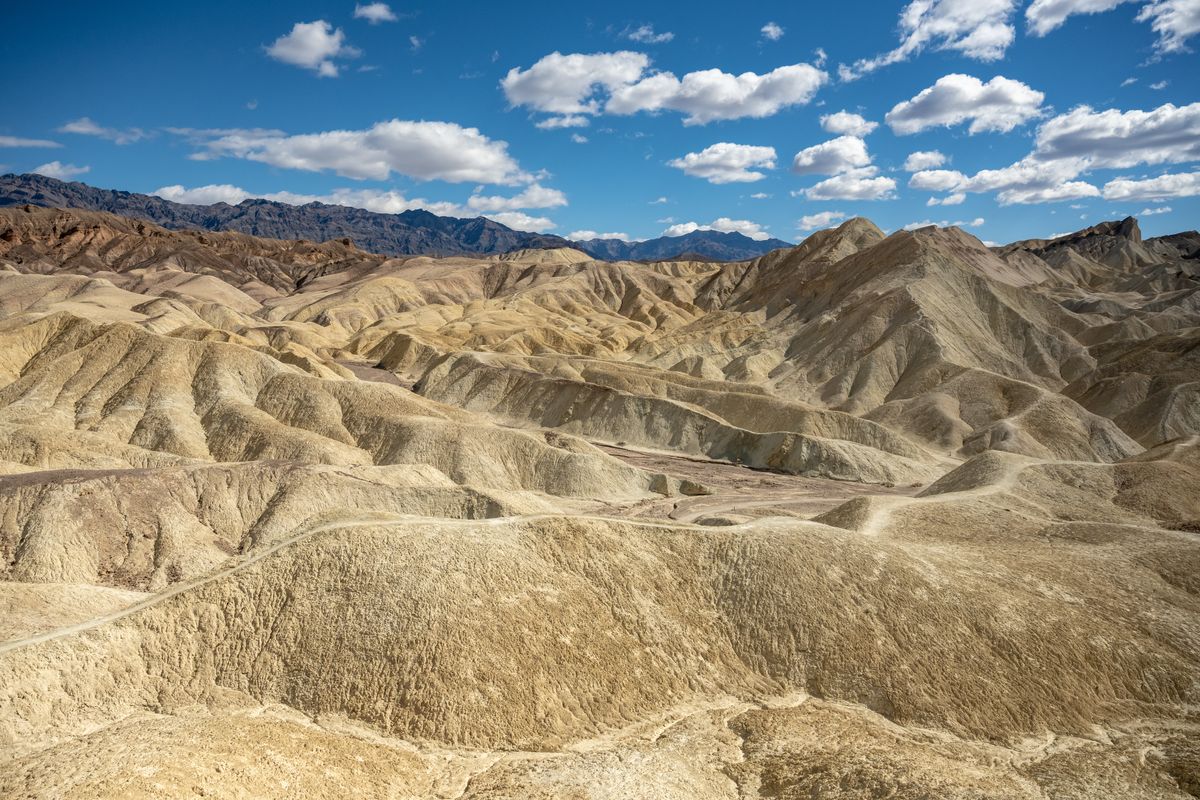
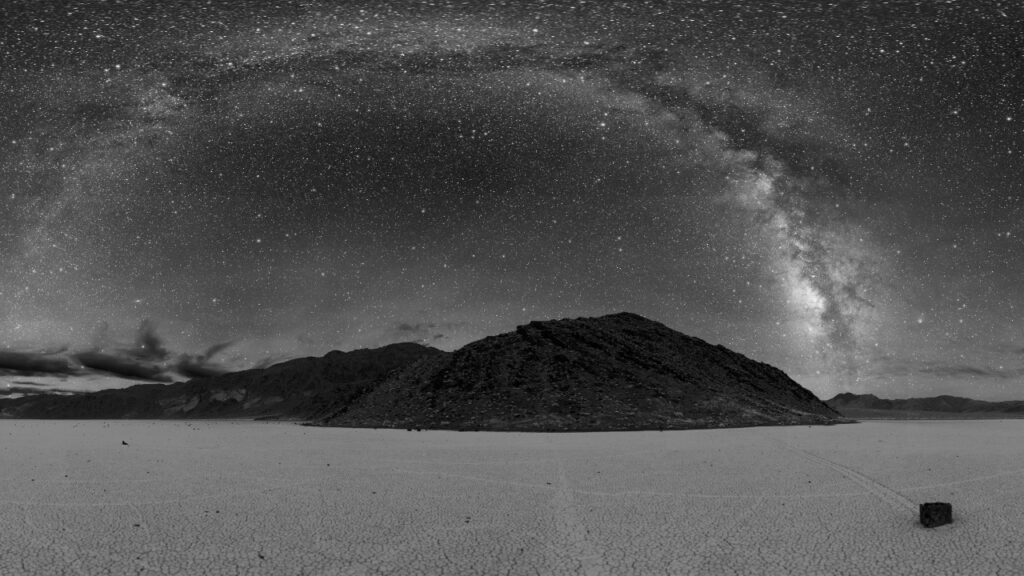
Somewhere in the emptiest corner of Death Valley, rocks the size of bowling balls have been dragging themselves across a dry lakebed for centuries. They leave tracks behind like tire marks in the mud, and nobody has ever caught one moving in person.
No motor, no rope, no prank. For most of the 20th century nobody could explain it, and the guesses ranged from magnetic fields to ice-age glaciers to, more than once, aliens.
Psst — we made you a West Coast Adventure Map. Nearly 1,900 of our favorite spots, already pinned, ready to load into Google Maps in two clicks — grab it here.
So what’s actually moving them?
The real answer didn’t show up until 2014, when a research team finally caught it on camera. Racetrack Playa gets just enough winter rain to pool into a shallow sheet of water, and when a cold night follows, that water freezes into a thin skin of ice.
Come morning, sun breaks the ice into floating panels, and wind gets underneath them. Those panels shove the rocks across the soft, cracked mud below — slow enough that nobody’s ever watched it live, fast enough to leave trails stretching hundreds of feet.
It’s a better story than a hoax — plain physics pulled off something people credited to aliens for half a century. Tracks can run over 700 feet long and curve, loop, or double back depending on how the wind shifted while the ice was still sliding, so no two rocks’ paths look the same.
A dark island of rock called The Grandstand rises out of the middle of the playa, and it’s usually the first thing photographers stake out at sunrise or sunset. One rule matters more than any other out here: never touch or move the rocks, and stay off the playa entirely if it’s wet — a single footprint in soft mud can scar the surface for years.
📍 GET THE ULTIMATE CALIFORNIA MAP 🗺️
Get our curated list of the best adventures and things to do north of LA loaded onto your maps with just two clicks!
✅ Waterfalls ✅ Hikes ✅ Viewpoints
✅ National Parks ✅ 1400+ Pins
Getting to the Racetrack is its own adventure
This isn’t a pull-off-the-highway stop. The turn onto Racetrack Valley Road sits near Ubehebe Crater, and from there it’s roughly 27 miles of rough, washboarded gravel before you reach the playa — no pavement, no gas station, no cell signal.
High-clearance, four-wheel-drive is the real requirement here, not a suggestion. The volcanic rock scattered across the road is sharp enough that standard rental cars regularly limp out with flat tires, so bring a full-size spare (or two) and extra water for the roughly three-and-a-half-hour drive each way from Furnace Creek.
Go when the desert isn’t actively trying to kill you
Death Valley is under an extreme heat warning as this is written, with highs pushing past 120°F at Furnace Creek — this is not a summer errand. Save the Racetrack for fall through spring, roughly October through April, when temperatures out there are survivable for a full day of driving washboard roads and walking an unshaded lakebed.
Entry runs $30 per vehicle for a 7-day pass, and since Death Valley is a national park, an America the Beautiful Pass covers it if you’re already using one on federal land elsewhere this year.
If you’re making the drive out this way, the park’s actual hiking trails deserve a full day of their own — Racetrack Playa is a detour, not a substitute.
Stand at the edge of that lakebed with a two-hundred-foot rock trail running past your boots, and try to tell me the desert isn’t still explaining itself to you.
Trip tips: grab a rental car with real clearance for the drive out, and lock in your hotel in Furnace Creek or Stovepipe Wells before the good rooms are gone.
Rules and fees change — always confirm current requirements before you go.