The rocks on this Sonoma Coast bluff look like honeycomb, and the stone beside them helped build San Francisco
Some of the strangest rock on the California coast looks like it was chewed by giant bees. At Salt Point State Park on the Sonoma Coast, the sandstone along the shore is riddled with pits, ribs, and lacy little pockets that look more like a honeycomb than a cliff.
And a short walk up the bluff, that same sandstone still carries the drill holes of the quarrymen who cut it into blocks for early San Francisco. Two very different stories, one easy coastal walk. Who knew a pile of rocks could be this interesting?
Psst, we made you a West Coast Adventure Map. Nearly 1,900 of our favorite spots, already pinned, ready to load into Google Maps in two clicks: grab it here.
The honeycomb rocks have a name: tafoni
Those pockmarked rocks are called tafoni, from an Italian word for “cavern.” California State Parks calls Salt Point one of the few places where you can see really well-developed tafoni, and once you start noticing them, you’ll spot them on nearly every boulder near the water.
The leading explanation is salt. Ocean spray soaks the sandstone, the water evaporates, and salt crystals grow between the sand grains and pry them loose, leaving wind, rain, and waves to carry the grains off. The funny part is that even State Parks admits exactly how and why tafoni form is still a geological mystery.
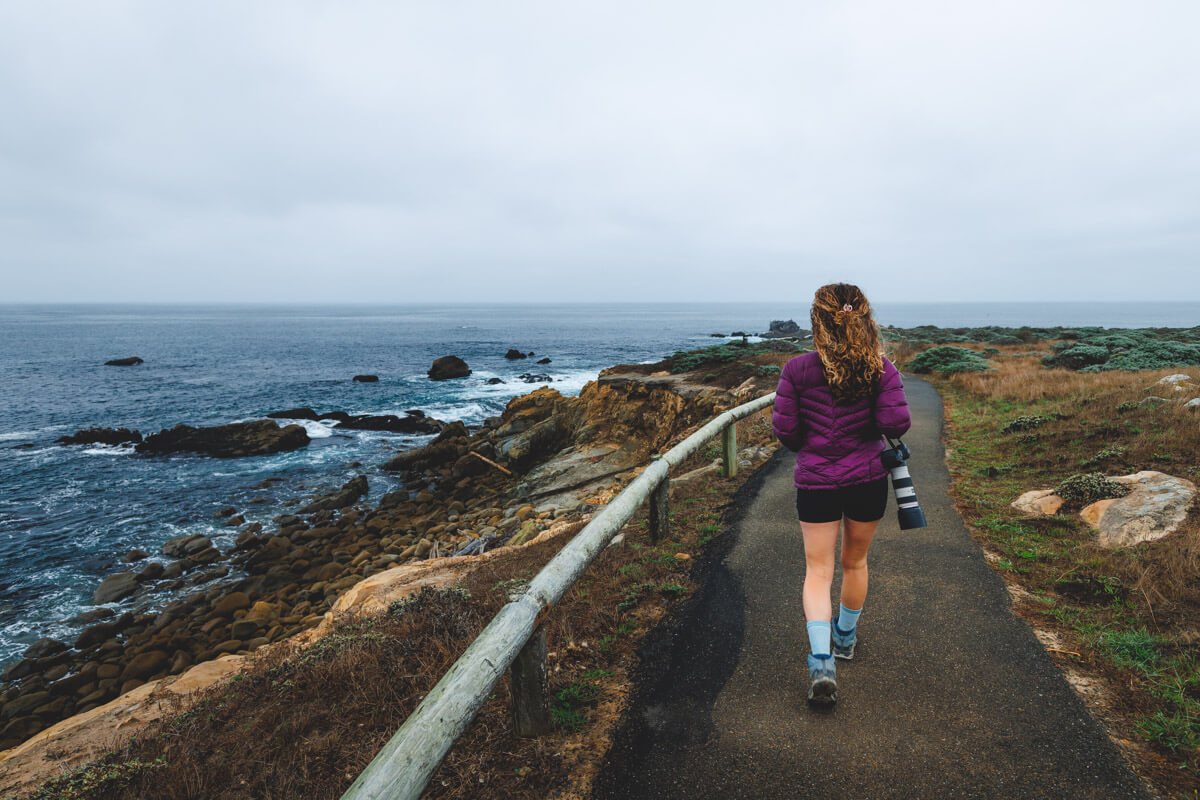
The best places to look are around Gerstle Cove and Fisk Mill Cove. Go slow, crouch down, and look at the edges of the rock where the texture gets almost lace-like.
📍 GET THE ULTIMATE CALIFORNIA MAP 🗺️
Get our curated list of the best adventures and things to do north of LA loaded onto your maps with just two clicks!
✅ Waterfalls ✅ Hikes ✅ Viewpoints
✅ National Parks ✅ 1400+ Pins
The sandstone that went to San Francisco
Long before anyone came here to admire the rocks, people came to haul them away. In the mid-1800s, a San Francisco company quarried sandstone at Salt Point, and the stone ended up in the city’s streets and buildings and at the naval yard on Mare Island.
The evidence is still lying around in plain sight. On the marine terrace just north of Gerstle Cove, you’ll find huge cut slabs, rows of drill holes, and old iron eye bolts left behind by the stoneworkers.
The park’s name goes back even further. The Kashaya Pomo gathered salt from the crevices along this shore for centuries, scraping it from the rocks with abalone shell tools.
The easy walk that shows you both
The Salt Point Trail to Stump Beach is the one to do here: 3.3 miles round trip, out and back, starting from the Gerstle Cove side of the park. The first 750 feet are paved, and most of the route is level bluff walking with the Pacific on one side and open meadow on the other.
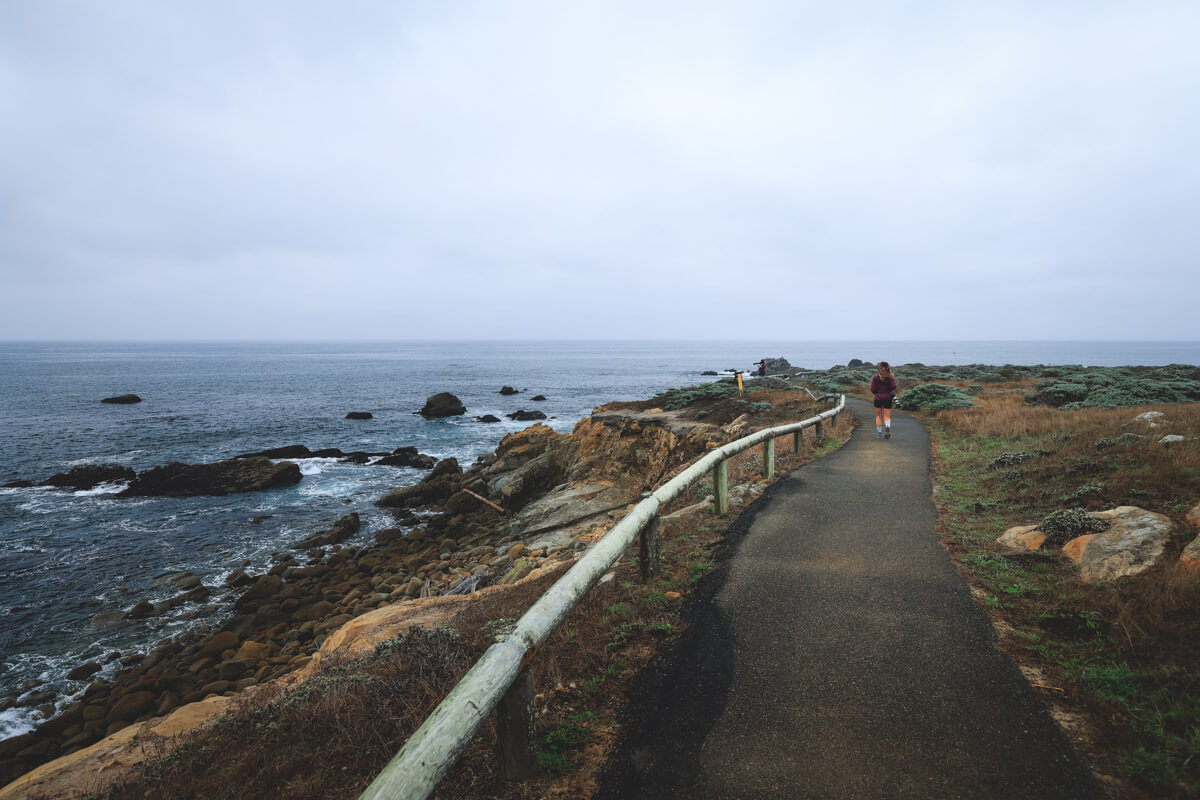
It ends at Stump Beach, a sandy cove tucked into a ring of steep bluffs. The way down to the sand is steeper than the rest of the trail, so save some energy for the climb back up. Stay back from the cliff edges too, since this coast is all crumbly sandstone and pounding surf.
Our take? Skip the pygmy forest climb on a first visit and spend that time poking around the coves instead. The forest is fun, but the shoreline is what makes Salt Point unlike any other stop on this stretch of Highway 1. If you want the longer loops, campgrounds, and the rest of the park, our full Salt Point State Park guide has you covered.
Why the cooler months are a great time to go
Summer gets the crowds, but late fall and winter bring a bonus. State Parks says gray whales migrate past the park’s kelp forests from November through January, so bring binoculars and keep scanning the horizon for spouts.

The water right below you is worth a look too. Gerstle Cove State Marine Reserve protects all marine life offshore, and it was among the first marine protected areas in California.
Plan your visit
Salt Point sits right on Highway 1 in northern Sonoma County, north of Jenner. Day-use areas are open from 8 a.m. until sunset, and State Parks lists day-use parking at $10 per vehicle.
Trip tips: grab a rental car to get up the coast, lock in your hotel before the good rooms are gone, or skip both and book a camper van instead.
So which would you hunt for first: the honeycomb rocks or the quarry drill holes? Tell us in the comments!
Rules and fees change, so always confirm current requirements before you go.