The scientists who set the ground rules for genetic engineering met at this Monterey Peninsula beach camp, and the dune trail out front is open to everyone
In February 1975, roughly 150 invited scientists from 13 countries gathered on the Monterey Peninsula to answer an uncomfortable question: had they just invented something dangerous? Outside, the Pacific was doing what it always does at Asilomar, slamming into the rocks and pushing sand into soft, wind-sculpted dunes.
The scientists eventually left. The dunes, the tide pools and that pounding surf are still right there, and you can wander all of it on an easy boardwalk and bluff trail in Pacific Grove.
Psst, we made you a West Coast Adventure Map. Nearly 1,900 of our favorite spots, already pinned, ready to load into Google Maps in two clicks: grab it here.
A refuge by the sea, built for young women
Asilomar didn’t start as a science retreat. In 1912, a committee persuaded the Pacific Improvement Company to donate 30 acres of coastal dunes to the YWCA, after Phoebe Hearst hosted that year’s Pacific Coast conference at her Pleasanton estate to help get the project going.
Construction started in the spring of 1913, and the name came from a contest. A Stanford student named Helen Salisbury won it by blending the Spanish words asilo (refuge) and mar (sea), so the place is literally a refuge by the sea.
The architect was Julia Morgan, who in 1904 became the first woman licensed as an architect in California and later designed Hearst Castle. Between 1913 and 1929 she designed 16 buildings here, and 11 of them still stand among the Monterey pines.
📍 GET THE ULTIMATE CALIFORNIA MAP 🗺️
Get our curated list of the best adventures and things to do north of LA loaded onto your maps with just two clicks!
✅ Waterfalls ✅ Hikes ✅ Viewpoints
✅ National Parks ✅ 1400+ Pins
The week biologists hit pause
By the 1970s, Asilomar was part of California State Parks (it joined the system in 1956) and was still hosting conferences, just as it was built to. The most famous one ran from February 24 to 27, 1975, organized by researchers including Paul Berg, Maxine Singer and David Baltimore.
Scientists had voluntarily paused certain recombinant DNA experiments, the early work behind genetic engineering, while they figured out the risks. At Asilomar they voted to lift that pause, but only with safeguards: experiments were sorted by hazard level, each with its own containment rules.
Those decisions fed directly into the National Institutes of Health’s guidelines for recombinant DNA research in 1976. Not bad for a few days at the beach, right?

Start on the dunes boardwalk
Here’s my take: skip the conference grounds at first and head straight for the dunes. The Asilomar Dunes Boardwalk is about a quarter mile long, a raised wooden path winding through hummocks of sand right along the shore.
These dunes haven’t always looked this good. They were once trampled and choked with iceplant, and they’ve since been replanted with natives like sand verbena, beach sagewort, lupine and coyote bush, with Monterey pines taking over farther back.
Stay on the boardwalk, since the plants holding all this sand in place are the whole point. It’s part of the Asilomar Dunes Habitat Natural Preserve, so think of it as walking through a restoration project that actually worked.
Then follow the coast trail
Right along the shore, the Asilomar Coast Trail runs along the bluffs for roughly three-quarters of a mile to a mile, depending on where you hop on. California State Parks lists it as accessible, so this is an easy stroll with lots of little spur paths dropping down to the rocks.
Link the coast trail with the boardwalk and you’ve got a loop of around two miles. Keep an eye on the kelp for sea otters cracking open shells, and on the rocks for seals hauled out and looking extremely unbothered.
Those spur trails lead to rocky tide pools full of anemones and sea stars. Asilomar sits inside a marine reserve, so everything stays put: no collecting shells, rocks or critters.
Watch the birds, and respect the surf
Look for Black Oystercatchers, the black shorebirds with bright orange-red beaks working the tide pools. State Parks says the oystercatchers here raised three chicks this year for the first time since 2018, and it occasionally asks visitors to respect temporary beach closures to protect them.
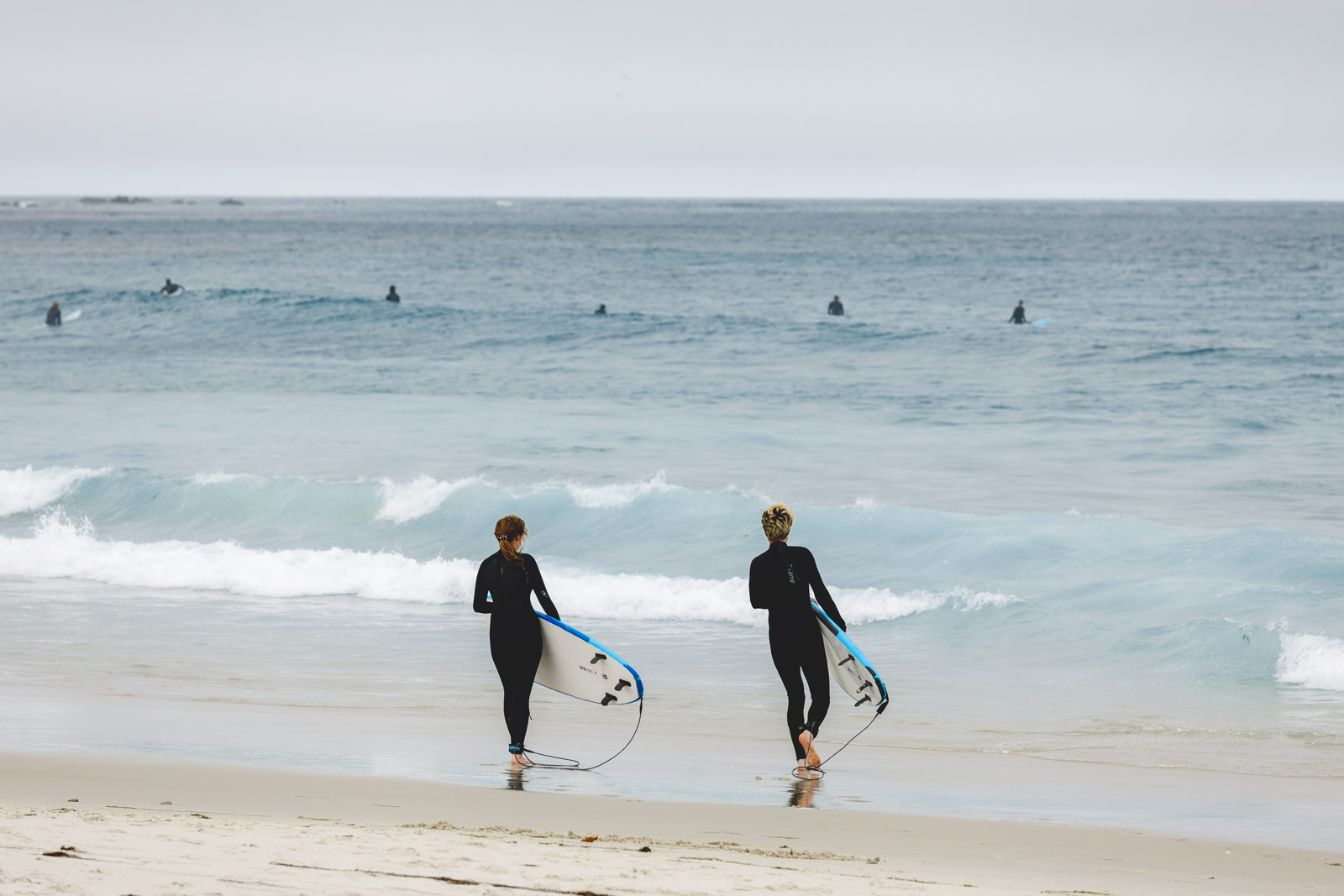
The waves here are big and powerful most of the year, which is exactly why surfers love this stretch. Admire it from the sand unless you really know what you’re doing, and check the Asilomar State Beach page for current conditions and ocean safety info.
🏨 Need a place to crash nearby?
From rustic cabins to boutique inns—check prices and availability in just a click.
Know before you go
The state beach is open from 8 AM to sunset, and parking is along Sunset Drive next to the beach and trail (pull fully off the pavement so you’re not in the bike lane). Leashed dogs are welcome on the beach, the trails and the conference grounds, just not inside the buildings.
Give yourself time to wander the historic grounds after your walk, too. If you’re building a bigger peninsula trip, our guides to things to do in Monterey and the best hikes in Monterey have plenty more to fill the day.
Go in the last hour before sunset if you can. The light turns the dunes gold, the surf goes silver, and it’s easy to see why a bunch of scientists picked this exact spot to think hard about the future.
Trip tips: grab a rental car to get out here, lock in your hotel before the good rooms are gone, or skip both and book a camper van instead.
So, would you head for the tide pools first or the boardwalk? Tell us in the comments.
Rules and fees change, so always confirm current requirements before you go.