This California beach used to be a landfill, and it’s illegal to take a piece home
Fort Bragg’s most photographed beach used to be the town landfill. For over 60 years, locals tossed their garbage straight off these bluffs — bottles, appliances, even old cars — and the Pacific spent the next several decades quietly turning the wreckage into something people now drive hours to see.
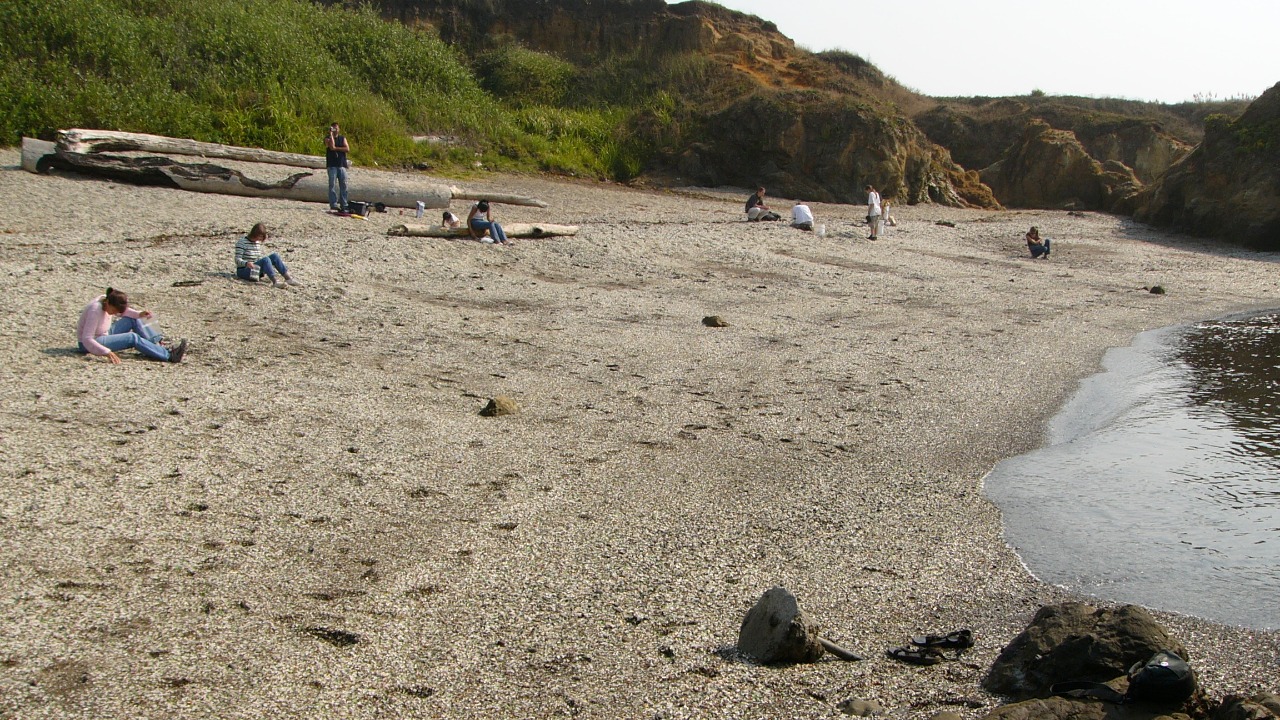
Today it’s called Glass Beach, and instead of sand, the shoreline is covered in thousands of smooth, jewel-toned pebbles of sea glass. There’s just one catch: you’re not allowed to take any of it home.
Who drives out of their way for a beach made of trash? Apparently, thousands of people a year — us included.
How a dump became one of California’s strangest beaches
The dumping started in 1906, right after an earthquake leveled much of Fort Bragg and left the town without a real way to deal with the debris. Tossing it off the cliffs became the easy fix, and the practice stuck around for six decades before the state finally shut it down in 1967.
What happened next took decades, not a renovation crew. Wave after wave ground the broken glass down, tumbling sharp edges into smooth, rounded pebbles in green, brown, white, and the occasional rare cobalt blue.
California State Parks bought the 38-acre site in 2002 and folded it into MacKerricher State Park. The spot locals once called “the dumps” now pulls in visitors from around the world.

📍 GET THE ULTIMATE CALIFORNIA MAP 🗺️
Get our curated list of the best adventures and things to do north of LA loaded onto your maps with just two clicks!
✅ Waterfalls ✅ Hikes ✅ Viewpoints
✅ National Parks ✅ 1400+ Pins
Picking up the glass is actually illegal
Here’s the part that surprises people: taking sea glass home from Glass Beach isn’t just frowned on, it’s against the law. The beach falls under state park rules (14 CCR § 4611), and rangers can write a citation with a fine up to $500 for removing natural features — glass included.
Enforcement is spotty, which is part of the problem. Between wave action grinding the glass down further and roughly a thousand visitors a day pocketing “just one piece” during peak summer, the beach has noticeably thinned out over the years.
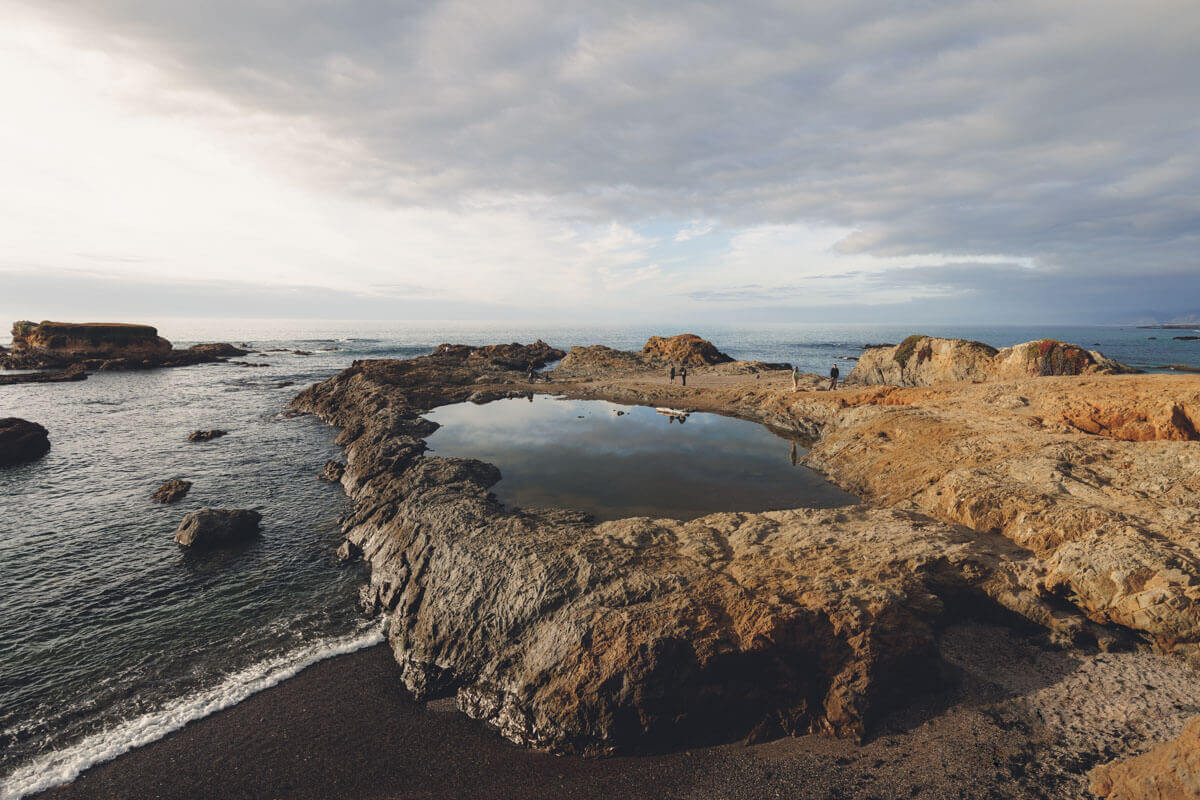
We’ve stood over the rock pools here ourselves, and even a few years back the glass already looked sparser than in older photos of the place. Leave what you find — that’s the only reason there’s still anything left to see.
Want to actually see more glass? Skip the famous spot
Here’s the twist most first-time visitors never hear: the section everyone photographs, officially Site 3, isn’t where most of the remaining glass actually is anymore. Two older dump sites — Site 1 (1906–1943) and Site 2 (1943–1949) — sit just south, outside the state park boundary, and by most accounts still hold more glass than the famous section does.
Both are reachable on foot via the Coastal Trail that runs south from the same parking area. It’s a longer walk with a bit of a scramble down the bluffs, but if you actually want to see color underfoot instead of hunting through picked-over rock, it’s worth the extra effort.
Getting there
Park at the free lot where Elm Street meets Old Haul Road — it holds about 30 cars and marks the start of the Glass Beach section of MacKerricher State Park. From there it’s a flat, paved walk of a few hundred yards out to the bluffs, then a short, unpaved scramble down to the sand since the old stairs washed out in 2017.
Wear shoes you don’t mind getting a little wet and gritty — the “beach” here is broken glass and pebbles, not the soft stuff. If you’re making a day of Fort Bragg, our guide to things to do in Mendocino covers the rest of the coastline just south of here.
Trip tips: grab a rental car for the drive up Highway 1, lock in your hotel in Fort Bragg or Mendocino before the weekend books up, or skip both and bring a camper van instead — this stretch of coast has some of the best pull-offs in Northern California.
Rules and fees change — always confirm current requirements before you go.